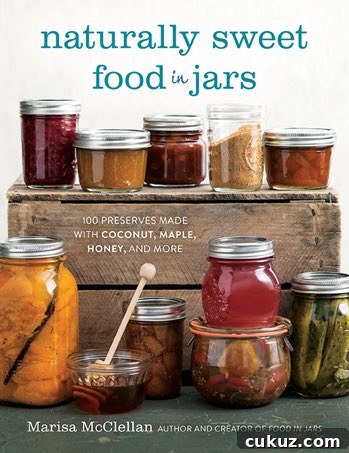
This week’s canning and preserving book review features Naturally Sweet Food in Jars.
If you follow home food preservation, you’ve likely heard of Marisa McClellan. McClellan is an experienced cookbook author and canning enthusiast whose blog, Food in Jars, is widely respected in the preserving community. She champions small-batch preserving, acknowledging that many home preservers prefer modest quantities rather than the old practice of putting up dozens of jars at once.
Her latest book, Naturally Sweet Food in Jars, focuses on preserves made with alternative sweeteners—coconut sugar, maple syrup and maple sugar, honey, agave nectar, and more. At roughly 200 pages, the book presents not only jams but also pickles, relishes, sauces, glazes, and a variety of sweet treats, all crafted without refined white sugar.
Low-Sugar Not Low-Carb
It’s important to be clear: these recipes are not the same as low-sugar or no-sugar preserves made with low-sugar pectin. Making soft spreads with very little or no sugar requires special low-sugar pectin and recipes formulated for that pectin. Naturally Sweet Food in Jars avoids refined sugar by using alternative sweeteners, but many of those ingredients are still sugars or concentrated sweeteners and will contribute carbohydrates.
Coconut sugar, for example, is less processed than white sugar and has a different flavor profile, but it remains a sweetener. The book’s recipes may sometimes be lower in carbs than their refined-sugar counterparts, but they are not automatically low-carb or free of sweeteners. The emphasis is on natural, less-refined sweeteners rather than on eliminating sweetness altogether.
For anyone who enjoys sweet flavors and wants to reduce reliance on refined white sugar—or prefers traditional sweeteners like honey and maple—this book is a useful and flavorful resource.
I can personally vouch for a few standout recipes: Meyer Lemon Curd sweetened with honey is intensely flavorful and spoon-licking good, while Cranberry Butter, made with real maple syrup, balances tartness and sweetness beautifully. The book also offers creative recipes like a spicy Strawberry Dipping Sauce sweetened with coconut sugar, and clever uses of juice concentrates to add sweetness to Zucchini Relish and canned Apricot Halves with Vanilla. Dried fruit and agave nectar appear as natural sweetening options in several recipes as well.
The Basics Too
Alongside recipes, the book covers practical preserving fundamentals: water bath canning, the difference between high-acid and low-acid foods, recommended types of salt, the role of pectin, and realistic guidance about shelf life when using less-refining sweeteners. Shelf life can be shorter for items preserved without large amounts of refined sugar, but that is often less of an issue when you’re making one or two jars for immediate use rather than stockpiling dozens for long-term storage.
Naturally Sweet Food in Jars makes a welcome addition to a home preservation library. It stands apart from other preserving books by combining a commitment to more natural sweeteners with practical canning techniques. The result is a collection of recipes that appeal to those who want to enjoy sweeter flavors while using ingredients they consider more natural.
Many favorite cookbooks are prized for their quirkiness or unexpected ideas. Naturally Sweet Food in Jars strikes a pleasing balance between quirky inspiration and user-friendly instruction. It’s an approachable book for home preservers of all levels who want to explore alternatives to refined sugar while continuing to put up delicious, jarred foods.