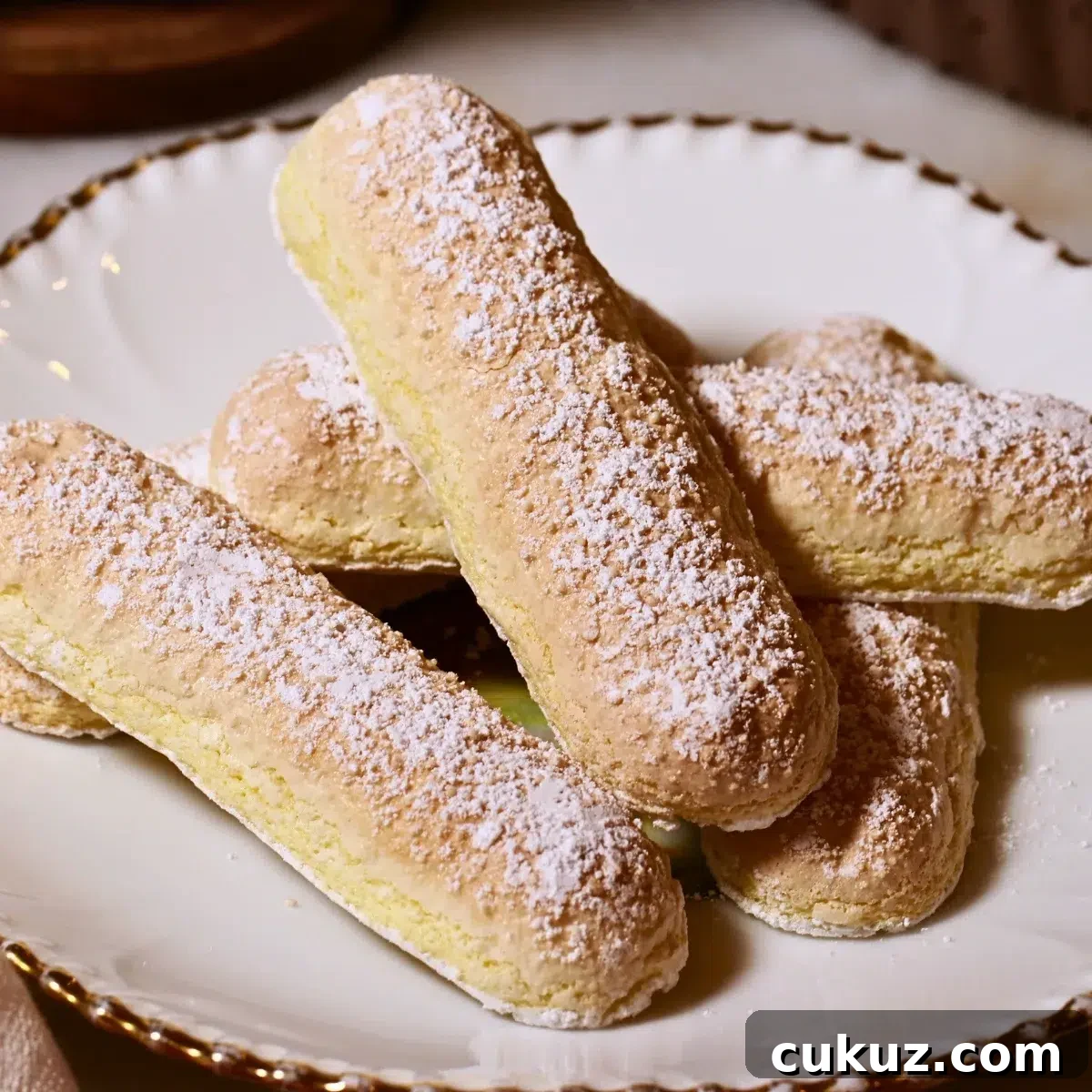
You can make light, airy ladyfingers at home with a few simple steps. They’re perfect for tiramisu, charlotte cake, trifles, mousse cakes, and more. This guide explains the method step by step and includes troubleshooting tips so your ladyfingers won’t turn out dense or flat.
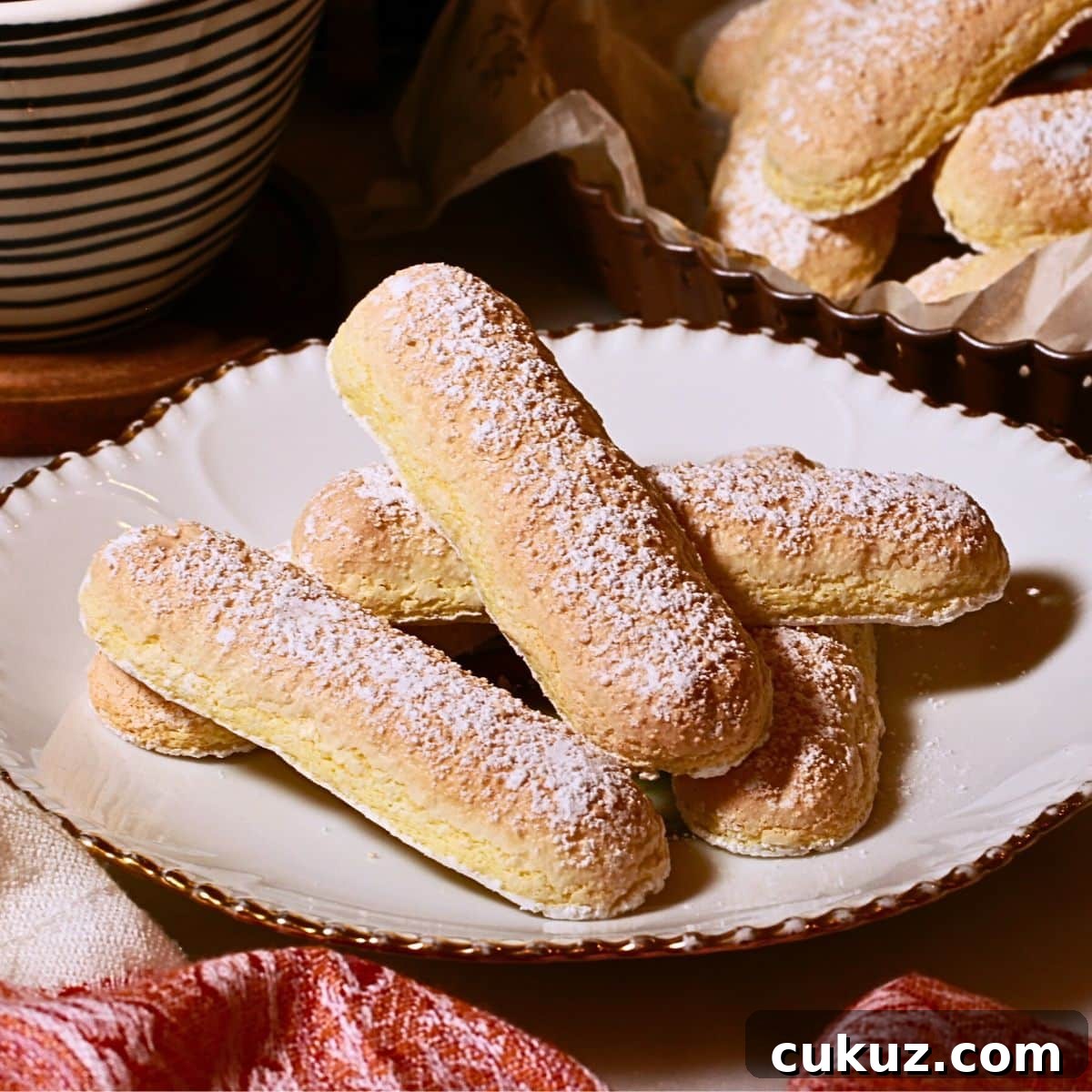
Ladyfingers are essential for tiramisu and many other desserts, yet they can be hard to find fresh in stores. The good news: they’re surprisingly easy to make at home, and homemade ones taste far better than stale store-bought biscuits.
As with any delicate sponge, technique matters. In this post I’ll explain each step and share the key tips you need to get a very light, airy texture every time.
Let’s get started!
The 3 Reasons You’ll Love This Recipe
Why this ladyfinger recipe stands out:
- Simple and quick: Six easy steps and four basic ingredients. This method creates light ladyfingers without whipping yolks separately.
- Very airy: Follow the essential tips in this post to achieve a delicate, airy texture.
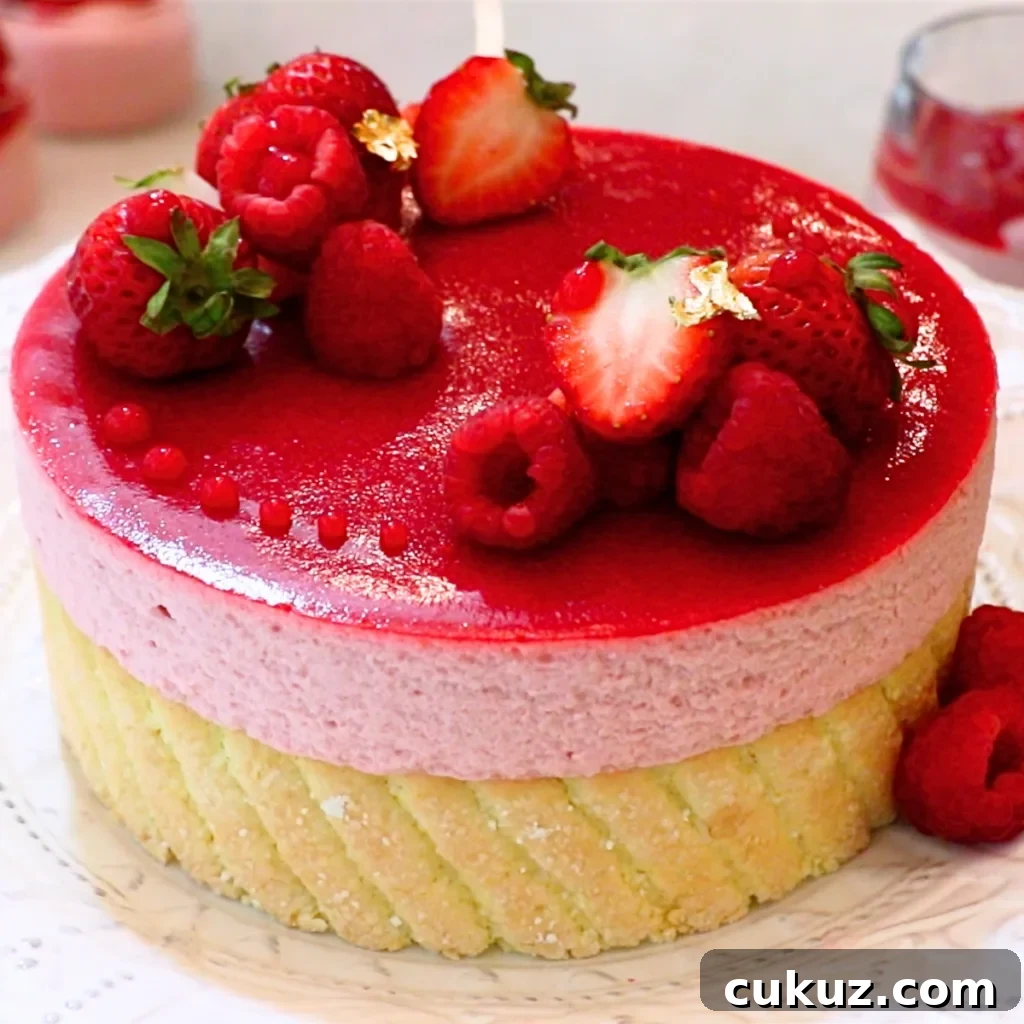
- Versatile: Use the same recipe for tiramisu, mousse cakes, charlotte, teatime snacks, or to shape fun designs.
3 Tips for Avoiding Dense, Flat Ladyfingers
Flat or dense ladyfingers usually come from a loose batter. These three tips will help you keep the batter stable and full of air:
Tip 1. Whip the meringue until very fluffy
Whip the egg whites until they are glossy and hold very stiff peaks. Soft or under-whipped meringue won’t support the batter and will lead to flat ladyfingers.
Tip 2. Don’t overmix when folding
Fold gently and stop as soon as the flour disappears. Overmixing collapses the meringue’s air bubbles and loosens the batter.
Tip 3. Pipe the batter immediately
Finish piping right after mixing. Letting the batter sit causes more air to escape. Have your piping bag, nozzle, lined sheet, and preheated oven ready.
Why is the ladyfinger batter loose?
A loose batter is usually the result of under-whipped egg whites, over-folding, or letting the batter sit too long. Refer to the three tips above to avoid those issues.
Watch How To Make the Ladyfingers!
Follow the step-by-step video tutorial for a clear demonstration of each technique and timing.
Don’t forget to subscribe to the channel for more baking videos!
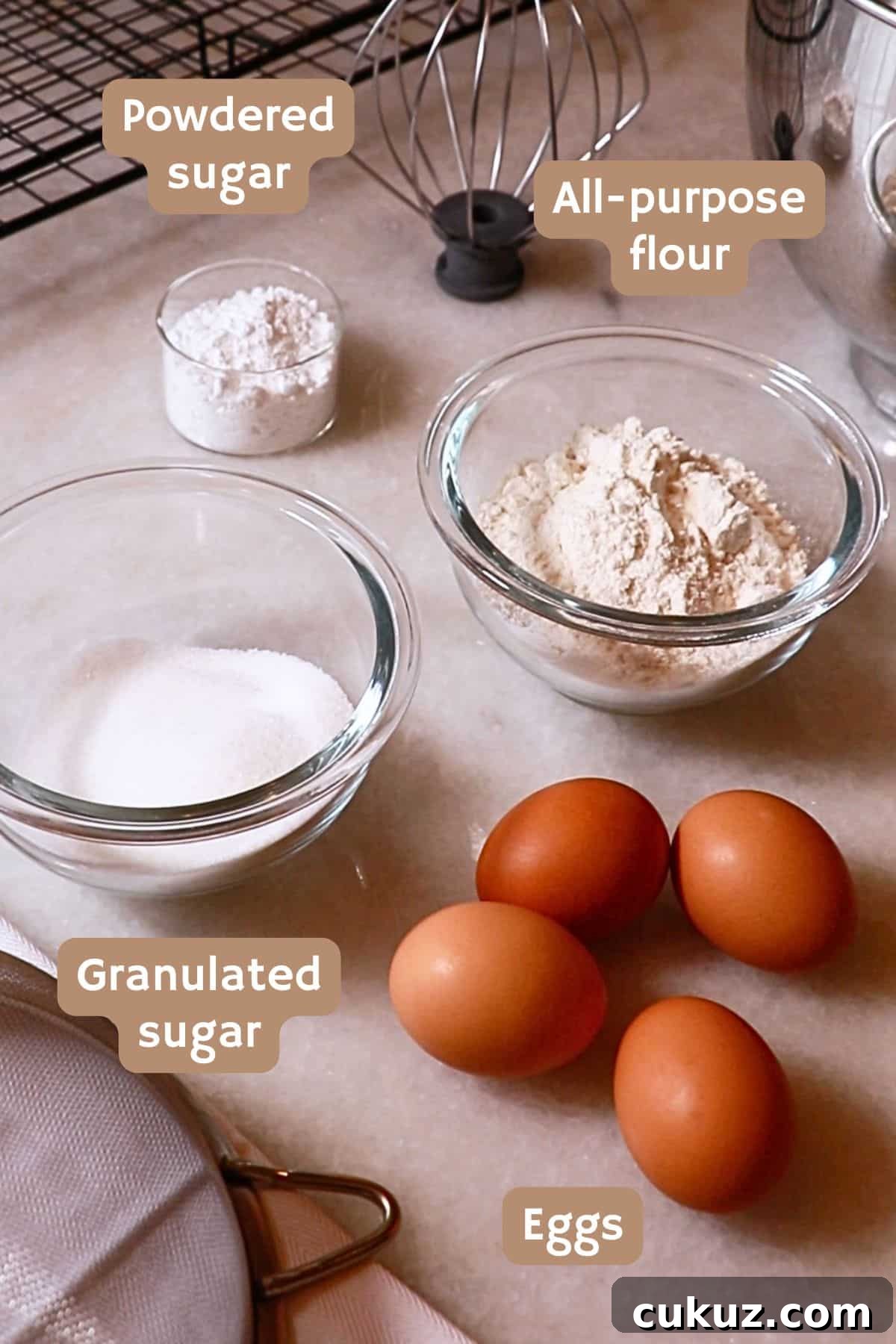
The 4 Simple Ingredients You’ll Need
You only need four basic ingredients: eggs, granulated sugar, flour, and powdered sugar.
- Egg whites: Make sure the whites contain no yolk or grease to whip them into a stable, fluffy meringue.
- Granulated sugar: Use granulated or caster sugar; add it in stages while whipping the whites for best structure.
- Flour: All-purpose or cake flour works. All-purpose is preferable if you plan to soak the ladyfingers, since cake flour can become overly soggy.
- Powdered sugar: Dusting the surface with powdered sugar helps the cookies rise and gives a lighter texture.
The 6 Steps To Make Ladyfingers
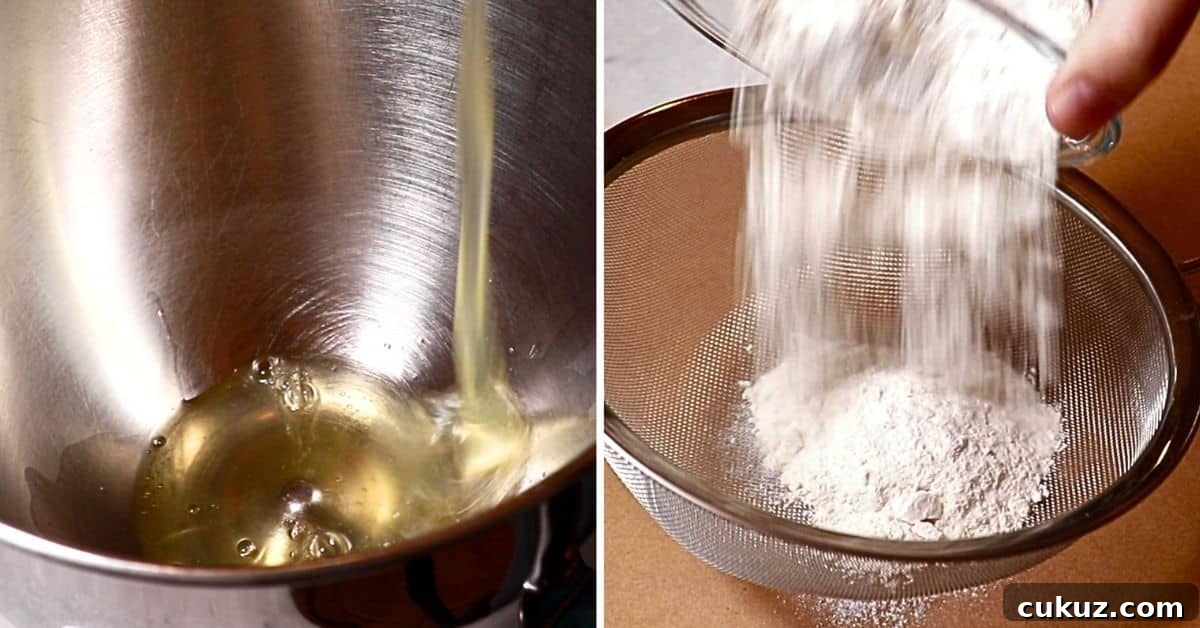
Preparation:
- Preheat the oven to 390°F (199°C).
- Sift the flour through a fine sieve.
- Line a full baking sheet with parchment paper.
- Fit a round tip into a large piping bag.
- Separate the eggs. Put the whites in a large bowl and the yolks in a small bowl.
Aya’s Quick Tip
Finish all preparations before whipping the meringue — the process moves quickly once the whites are ready.
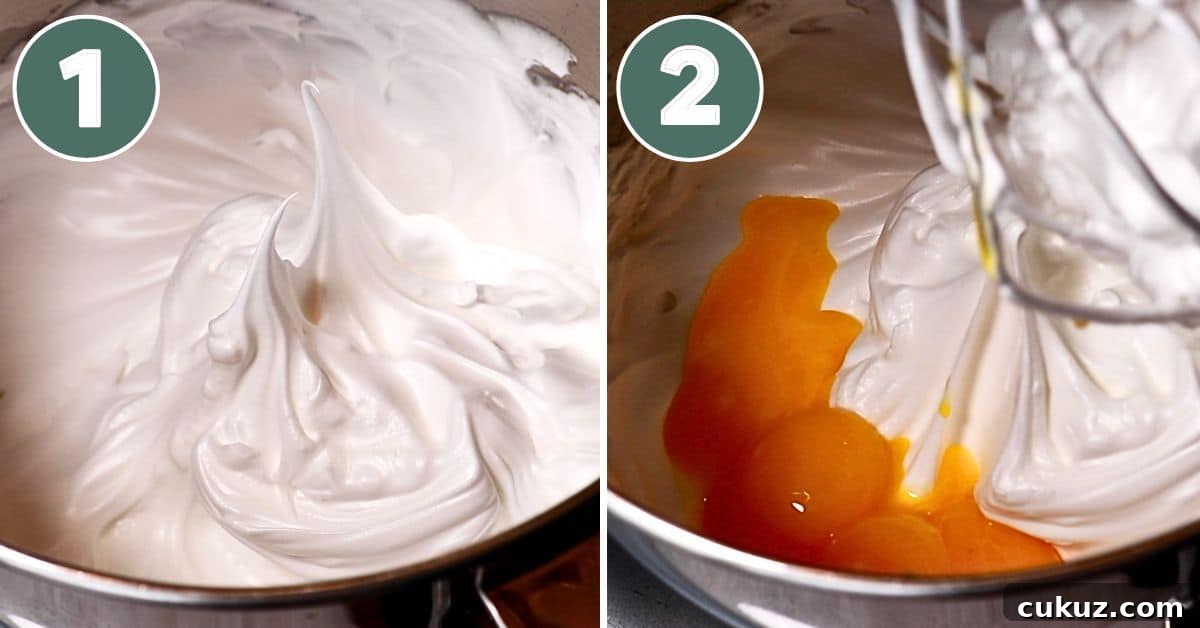
- Whip the egg whites at medium to medium-high speed. When they look foamy, add about half the sugar, then add the rest as they become fluffier. Continue until very fluffy and stiff.
- Add the yolks and whisk briefly until about half incorporated.
Aya’s Quick Tip
Add sugar gradually; adding it too early can prevent the whites from achieving full volume.
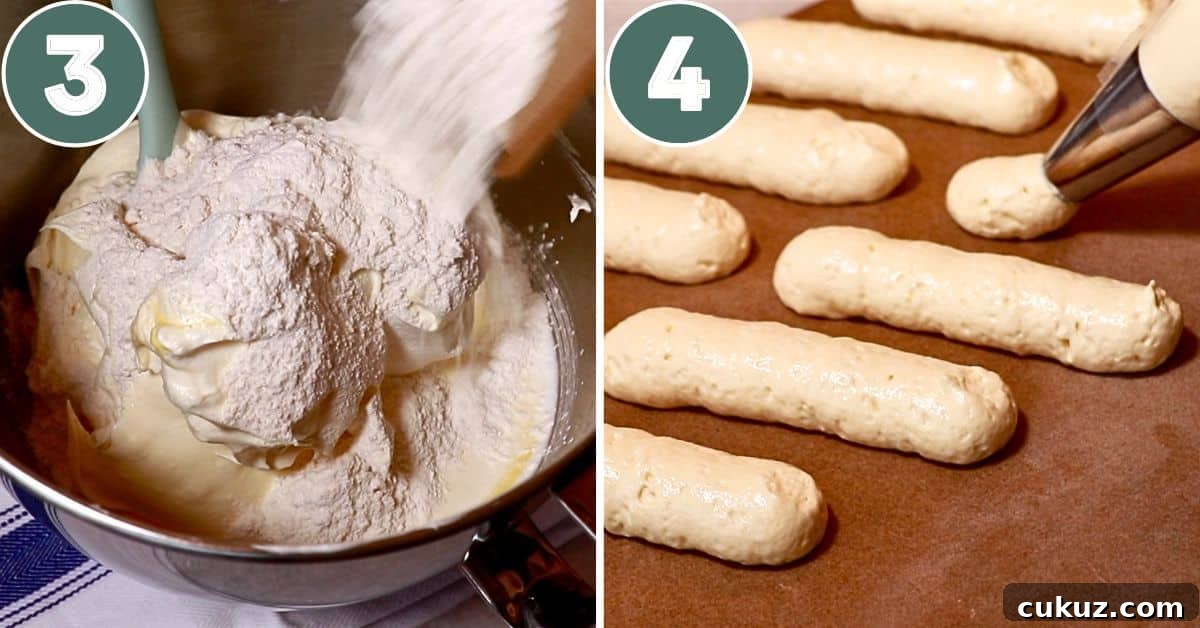
- Fold in the sifted flour gently. Stop folding as soon as no streaks of flour remain. Clean the sides and bottom of the bowl with a spatula to ensure even mixing.
- Transfer the batter to a piping bag. One easy trick is to portion the batter onto two pieces of plastic wrap, twist, cut the corner, and place them into the bag for quick piping. Pipe 4-inch by 1-inch lines (or any preferred shape) onto the prepared sheet.
Aya’s Quick Tip
Pipe a small dab of batter in each corner of the sheet to anchor the parchment, preventing it from sliding while you pipe.
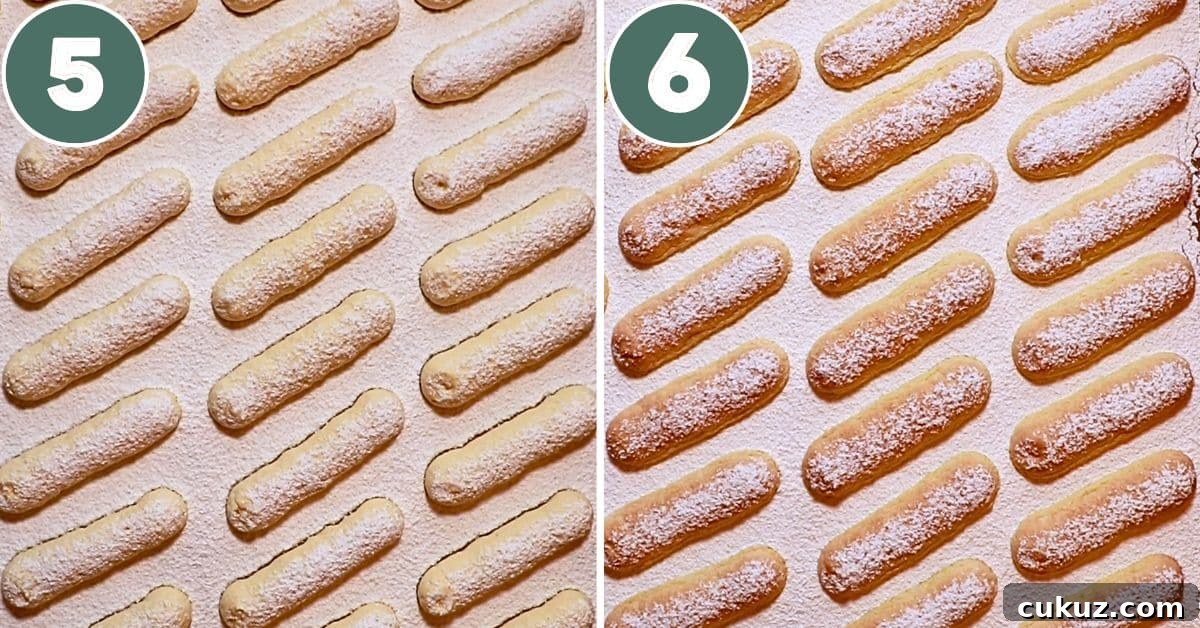
- Evenly dust powdered sugar over the piped lines. Wait 10–15 seconds and re-dust any spots where the sugar dissolved.
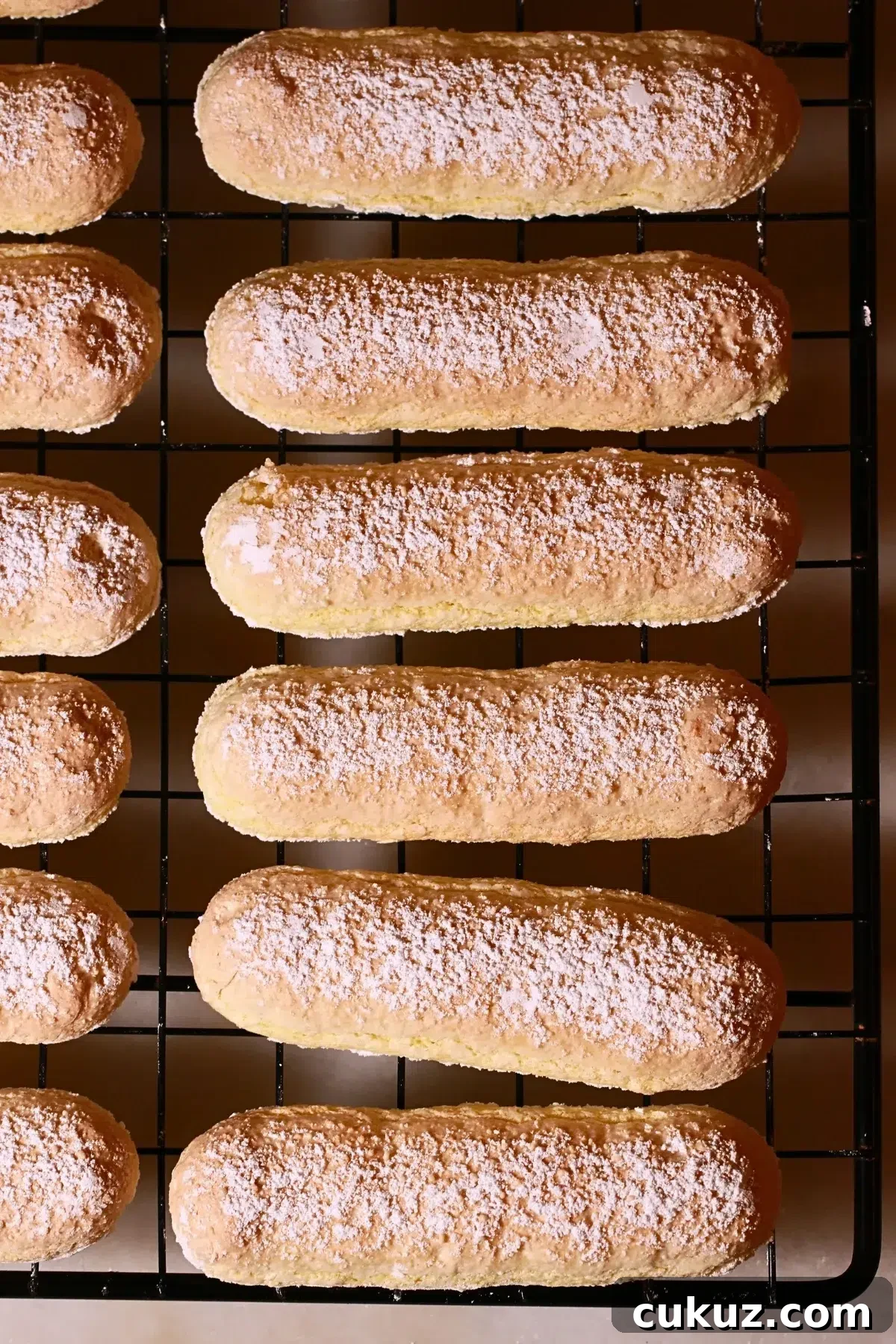
- Bake at 390°F (199°C) for 8–12 minutes, until the surface is just lightly golden and springs back gently to the touch. Remove and cool completely before lifting gently off the parchment with a small spatula.
Aya’s Quick Tip
- Powdered sugar helps the cookies rise and keeps them lighter.
- You can vary size and thickness; larger or thicker pieces need more bake time.
Should I bake them until fluffy or crispy?
This depends on taste. Baking just until set preserves a soft, spongey interior. Bake a little longer if you prefer drier, crisper ladyfingers for snacking.
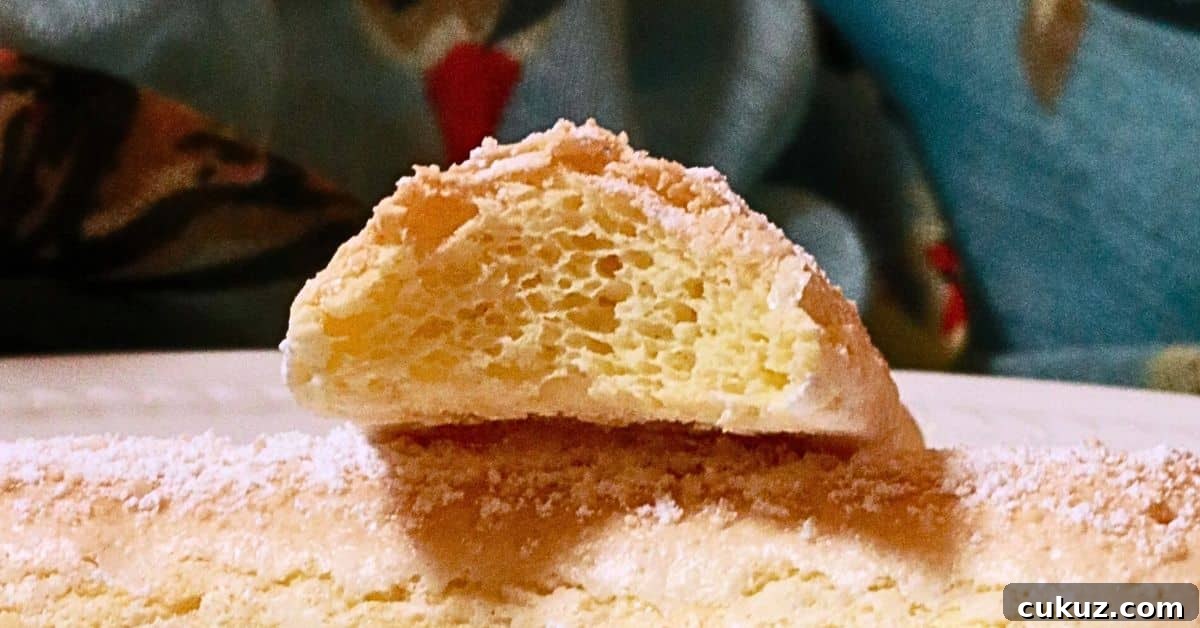
That’s it — ready to enjoy!
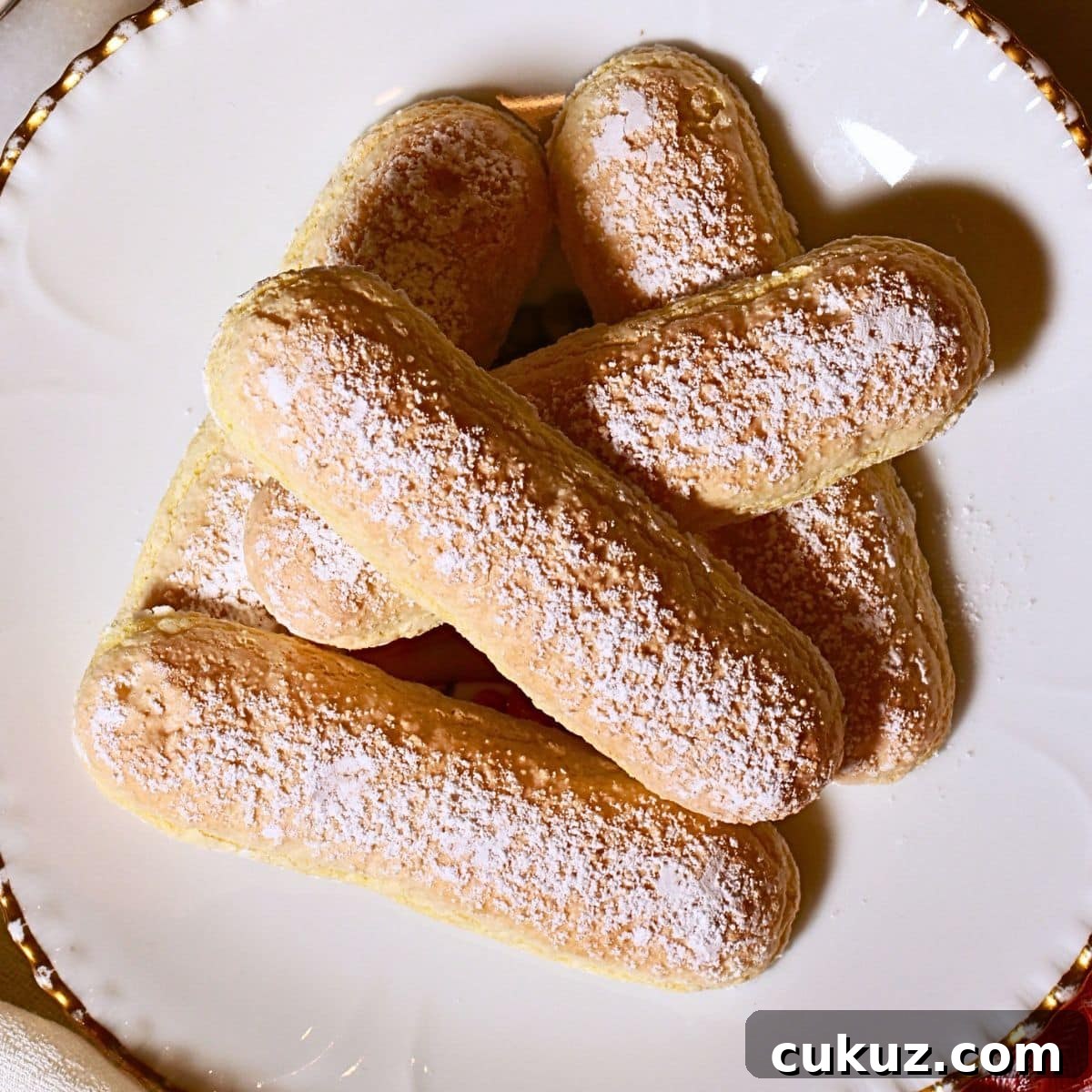
Serve them plain with tea or coffee, or use them to build tiramisu, charlotte, or other layered desserts.
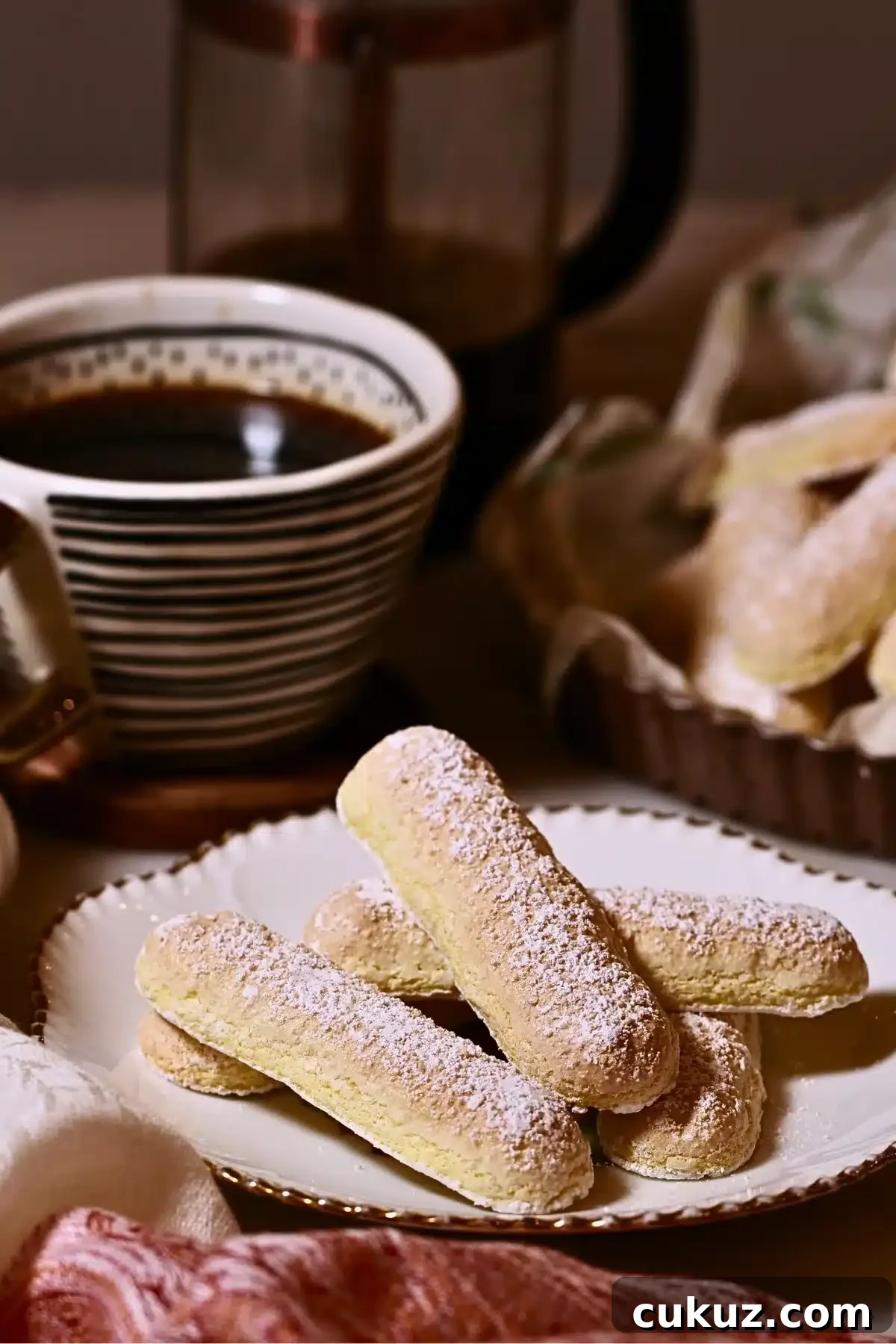
How to store it
Store in an airtight container for up to 2 days at room temperature or 4–5 days in the refrigerator. You can freeze them for several months.
For the lightest texture, consume the same day. These small sponge cookies dry faster than larger sponge cakes because they lack added oil or liquid that retains moisture.
Other variations
Enjoy ladyfingers in different ways:
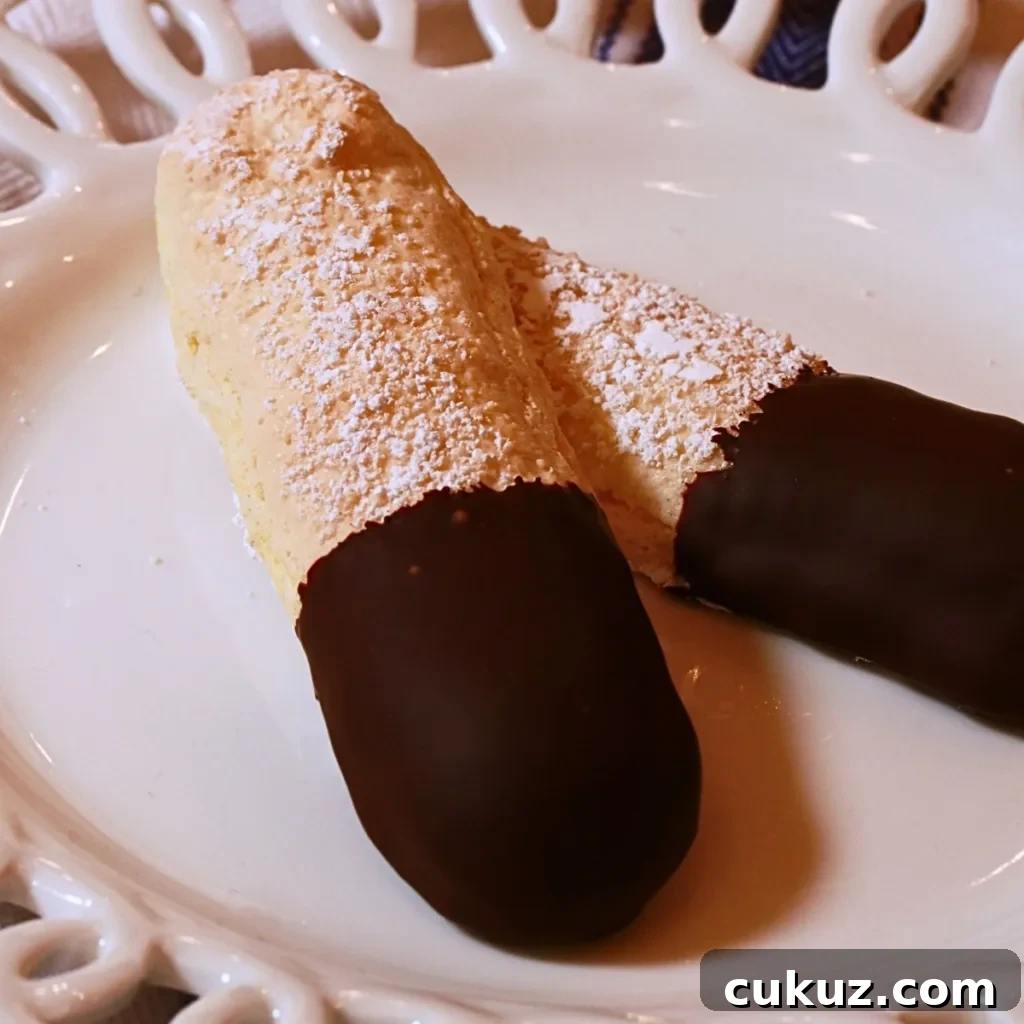
- Dip them in chocolate for elegant tea snacks.
- Use them to assemble tiramisu, charlotte, and other layered desserts.
- Pipe them into shapes—circles, hearts, animals—for a fun presentation.
- Sandwich ice cream between two for simple ice cream sandwiches.
You can make chocolate ladyfingers by folding in cocoa powder—just reduce a small amount of flour accordingly.


Frequently Asked Questions
What are ladyfingers?
Ladyfingers are small sponge biscuits piped into short stripes. They’re made by whipping eggs (typically whites and yolks), folding in flour, and baking into a light, airy sponge.
What is the history of Ladyfingers?
Ladyfingers (savoiardi) date back several centuries and are associated with the Savoy region. Their elongated finger-like shape gave them common names such as sponge fingers or finger biscuits.
Yes. Avoid adding too much liquid flavor, which can loosen the batter. Prefer dry flavorings like vanilla bean or citrus zest and powdered freeze-dried fruit over extracts or purees.
Adding butter or oil will change the structure and can make the batter too soft to hold its shape. For the classic light texture, avoid adding fats.
These cookies rely on whipped egg whites for lift. The trapped air expands in the oven and gives the sponge its rise, so chemical leaveners aren’t necessary.
More Sponge Cake Recipes
If you enjoyed these ladyfingers, try other sponge cake recipes available on the site for different flavors and techniques.
Did you try the recipe?
Share your honest feedback in the comment section. I’d love to know how it turned out for your special occasions.
Thank you! – Aya
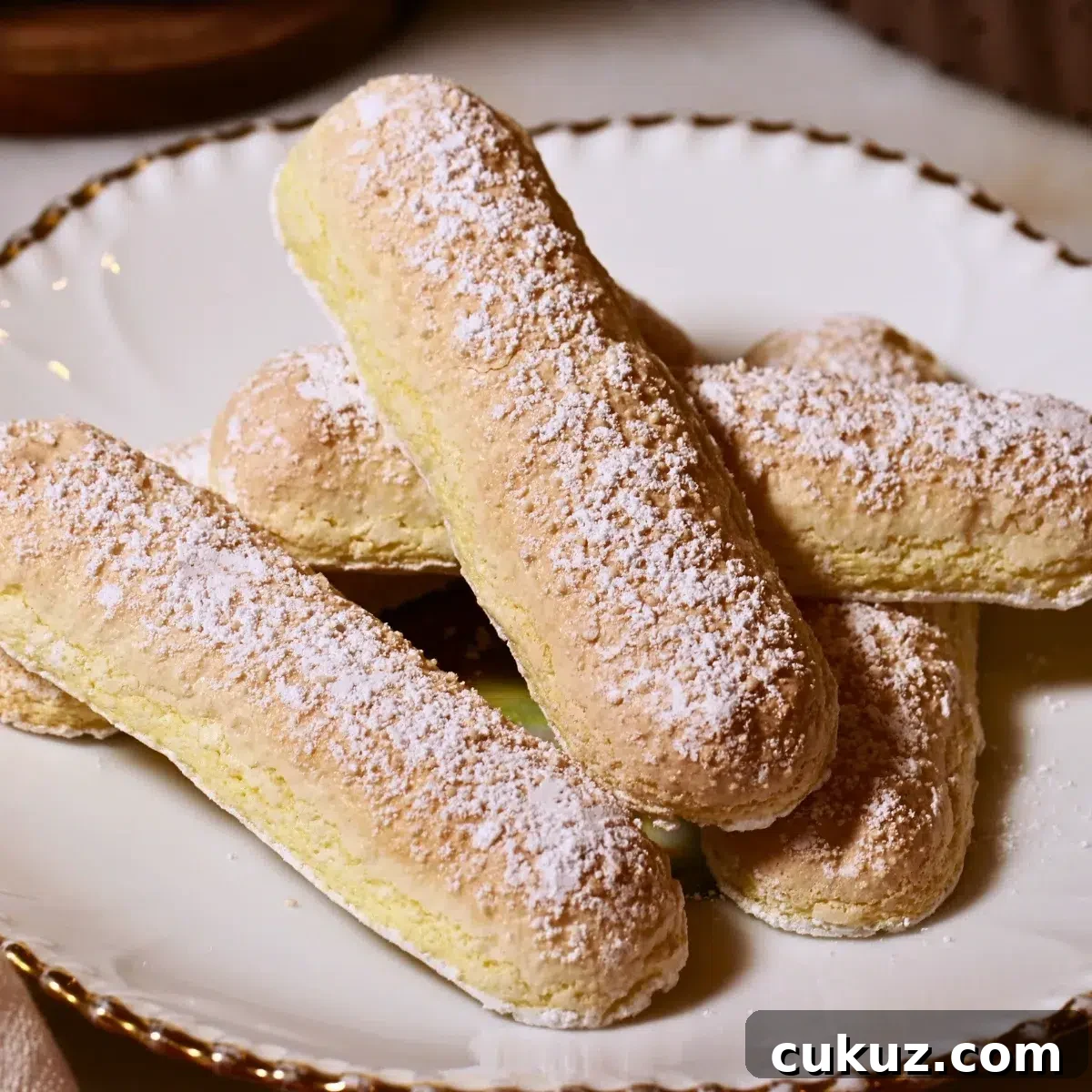
Best Homemade Ladyfingers
Equipment
Method
Nutrition
Notes
Video
Ingredients
- 135 g Egg white (From 4 eggs)
- 125 g Granulated sugar (½ + ⅛ cups)
- 4 yolks Egg yolk
- 120 g All-purpose flour (1 cup)
- Some Powdered sugar
NOTE: For best results, measure ingredients by weight. Cup measures are provided for convenience.
Equipment
- Stand mixer with whisk attachment (or hand mixer)
- Fine sieve
- Baking sheet pan (full sheet or two half sheets)
- Parchment paper or silicone mat
- Rubber spatula
- Pastry bag with a round piping tip
Method
- Preparation: Preheat oven to 390°F (199°C). Sift flour. Line a baking sheet with parchment. Fit a round piping tip in a bag. Separate eggs—whites in a large bowl and yolks in a small bowl.
- Whip the egg whites at medium to medium-high speed. When foamy, add about half the sugar. As the whites become fluffier add the remaining sugar. Continue whipping until very stiff and glossy. (135 g egg whites, 125 g sugar)
- Add the yolks and whisk briefly until about half incorporated. (4 yolks)
- Fold in the sifted flour gently until no streaks remain. Clean the spatula and bowl sides to ensure even mixing. (120 g flour)
- Transfer batter to a piping bag and pipe 4-inch by 1-inch lines, or your preferred shape. Anchor the parchment with small batter dabs in the corners to stop sliding.
- Dust powdered sugar over the piped lines. Wait 10–15 seconds and re-dust where the sugar dissolved. (Some powdered sugar)
- Bake at 390°F (199°C) for 8–12 minutes until lightly golden and springy. Remove and cool completely. Gently lift from the parchment with a small spatula.
Notes
How to store it:
Store in an airtight container for up to 2 days at room temperature or 4–5 days in the refrigerator. Freeze for a few months if needed.
Nutrition
Carbohydrates: 7 g
Protein: 0.4 g
Fat: 0.1 g
Tried this recipe?
Let us know how it was!