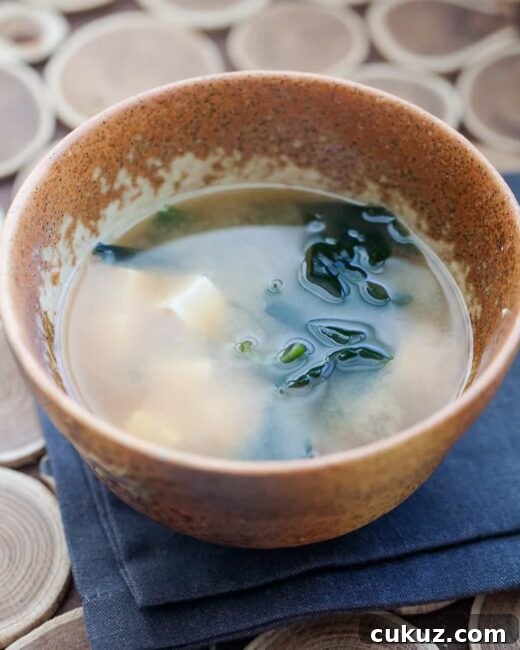
Whether the weather has turned cooler, you’re nursing a cold, or you want a comforting starter before your main course, a warm bowl of miso soup is always a welcome choice. Its deep, savory umami flavor is soothing and versatile, and there are many easy ways to make miso soup at home.
If you’ve never made miso soup before, don’t worry. Below are clear, step-by-step instructions for four different approaches: a 1-minute instant version, a 3-minute bowl using seasoned miso, a 4-minute method using instant dashi, and a 20-minute authentic recipe made from scratch with homemade dashi and miso paste. Pick the method that suits your time and the ingredients you have on hand.
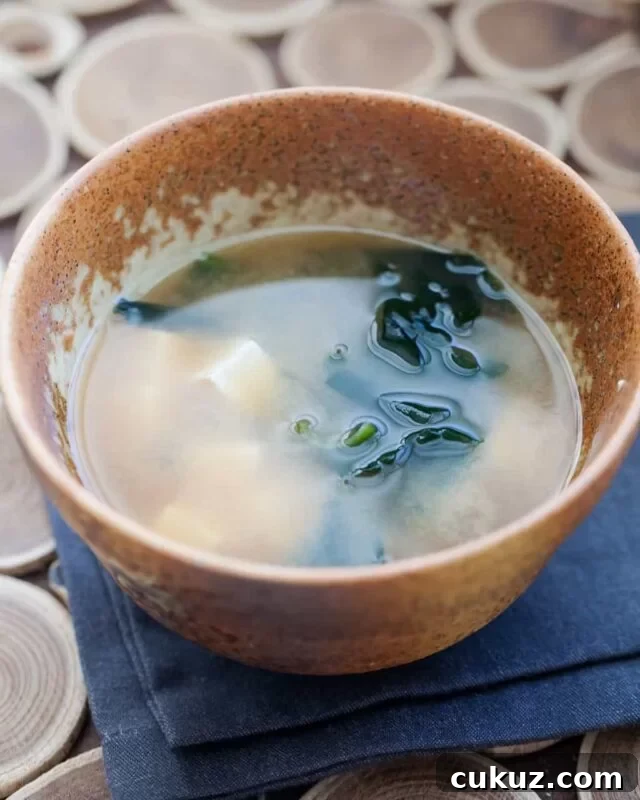
Why These Miso Soup Recipes Work
- Flexible options: choose a super-quick instant preparation or the more traditional route with homemade dashi and miso paste.
- Comforting, balanced savory flavor that’s both refreshing and satisfying.
- Classic Japanese taste profile built on umami from kombu, bonito, and fermented miso.
- Potential health benefits: fermented miso contains beneficial bacteria that may support gut health.
Main Ingredients
Classic miso soup relies on two essential components: dashi and miso paste.
- Dashi (pronounced DAH-shee) is the cornerstone of Japanese cooking. This simple broth is typically made from kombu (dried kelp) and katsuobushi (smoked, dried bonito flakes) and forms the base of many soups, sauces, and simmered dishes.
- Miso is a savory paste created from fermented soybeans combined with rice or barley and salt. The fermentation yields a salty, umami-rich paste used not only for soup but also for ramen, dressings, marinades, and more.
Once you have a basic miso soup, finish it with toppings like sliced green onions, cubed tofu, rehydrated wakame seaweed, shiitake mushrooms, clams, leeks, noodles, or seasonal vegetables.
How To Make Miso Soup – Step by Step (Authentic Dashi)
- Wipe kombu gently with a paper towel to remove any surface dust. Add the kombu and cold water to a saucepan and heat over medium-low. Remove the kombu just as small bubbles begin to appear along the surface—do not let it boil.
- Bring the water to a full boil, then add katsuobushi (bonito flakes) all at once. Boil for 60 seconds, then turn off the heat and let the bonito steep undisturbed for 10 minutes.
- While the bonito steeps, dice tofu into small cubes and rehydrate dried wakame in water until it expands; drain and discard the soaking water.
- After steeping, the bonito flakes will sink. Strain the broth through cheesecloth or a fine-mesh strainer to remove the flakes.
- Return the strained dashi to a gentle simmer, then remove from heat and whisk in miso paste until fully dissolved. Avoid boiling once miso is added to preserve its smooth texture and probiotics. Add tofu and wakame, then serve.
Super Quick 1-Minute Miso Soup
The fastest option is instant miso soup packets. These typically include powdered miso or miso paste sachets with freeze-dried tofu and toppings. Empty a packet into a bowl, stir in hot water, and it’s ready.
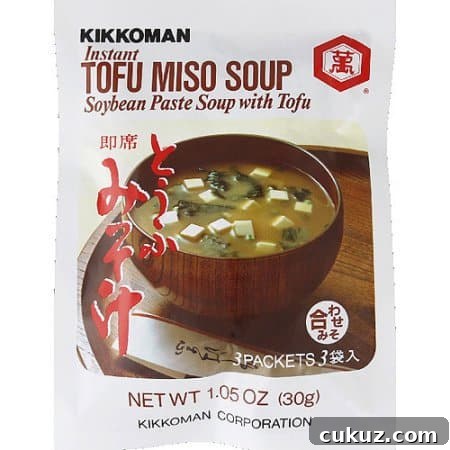
Not all instant brands are equal: powdered mixes are common, but packages that contain small miso paste packets (often found in Japanese brands like Marukome) give a richer, fresher taste. When shopping, a heavier-feeling package usually indicates paste rather than powder.
How to Make 1-Minute Miso Soup
- Heat 1 cup of water (microwave for about 1 minute or boil on the stove).
- Stir in the contents of one instant packet until dissolved.
3-Minute Miso Soup (Seasoned Miso)
Seasoned miso paste already contains dashi or bonito, so it dissolves into hot water quickly for an excellent bowl in minutes. Add cubed tofu and rehydrated wakame to finish.
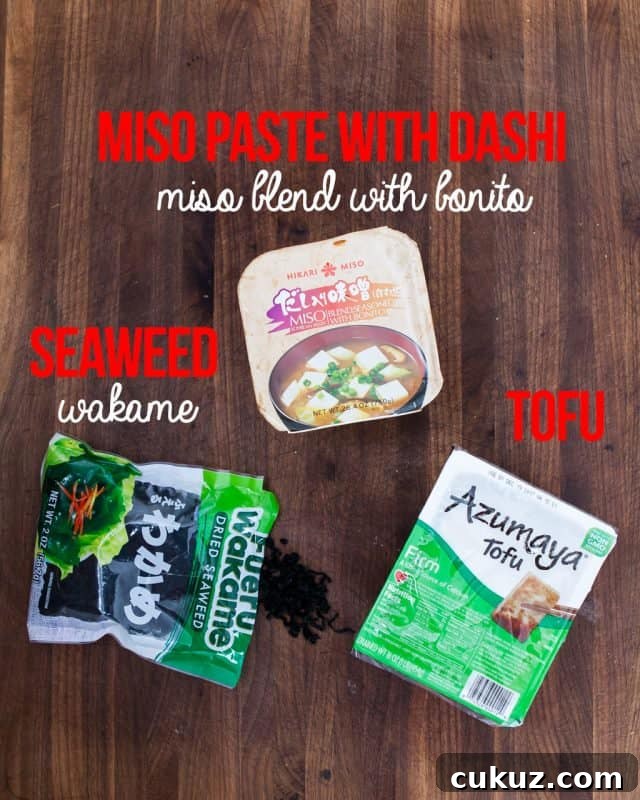
What is Wakame?
Wakame (wah-KAH-meh) is a type of seaweed commonly used in miso soup and salads. It’s sold dried and rehydrates quickly—soak a pinch in cold water for about 5 minutes or hot water for 1 minute. It expands significantly, so a teaspoon of dried wakame is enough for several bowls.
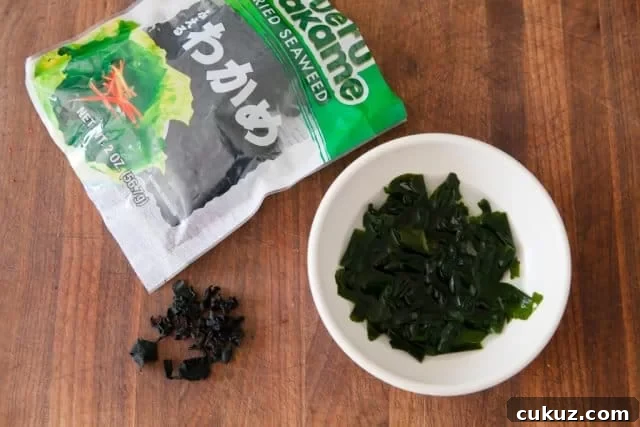
How to Make 3-Minute Miso Soup
- Soak wakame and drain.
- Cut tofu into small cubes.
- Heat water and remove from heat (or microwave 1 cup water for 1 minute).
- Whisk seasoned miso paste into the hot water, then add tofu and wakame.
A small miso measuring/whisk tool can be handy for scooping and dissolving paste neatly, though a regular teaspoon or tablespoon works fine.
4-Minute Miso Soup (Instant Dashi + Miso)
Instant dashi granules are a convenient shortcut: they dissolve like bouillon and give a quick dashi base. Use about 1 teaspoon instant dashi per 2 cups of water, then whisk in miso paste.
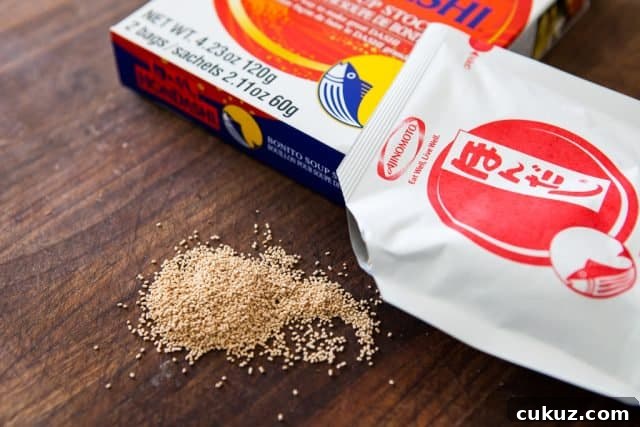
How to Make 4-Minute Miso Soup
- Cut tofu and rehydrate wakame.
- Boil water and remove from heat.
- Whisk in instant dashi (1 tsp per 2 cups water).
- Whisk in miso paste (about 2 tbsp per 2 cups water, adjust to taste) and add tofu and wakame.
20-Minute Miso Soup: From Scratch
For the most authentic flavor, make dashi from kombu and katsuobushi. Use a 4″x6″ piece of kombu for about 4 cups of water and roughly an ounce of katsuobushi.
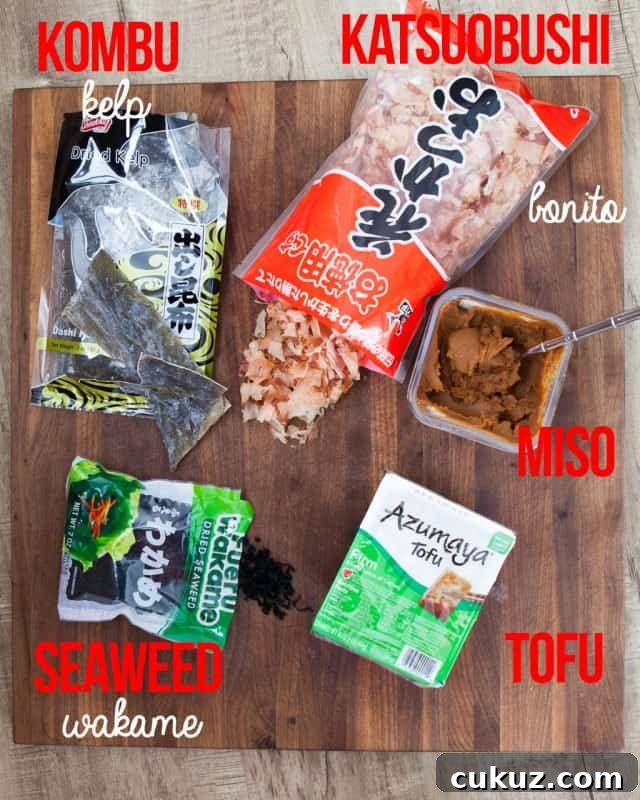
About Kombu and Katsuobushi
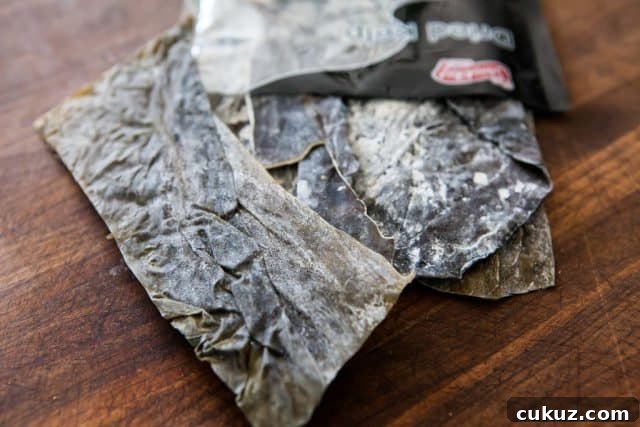
Kombu is dried kelp with a natural white powdery coating—do not wipe that away, as it contains flavorful crystals. Gently remove any dirt with a dry cloth. Kombu adds rich umami without needing MSG.
Katsuobushi are ultra-light shavings of smoked and dried skipjack tuna (bonito) that impart a smoky, savory depth to dashi.
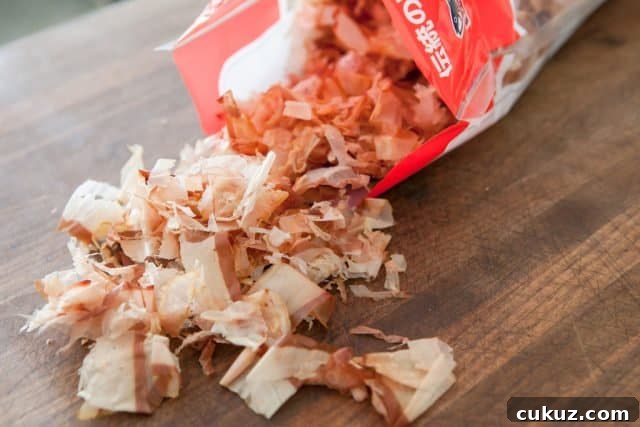
Making Dashi From Scratch
- Place kombu in cold water and heat over medium-low. Remove the kombu just before the water reaches a boil (or after 30 minutes to overnight soaking if time allows).
- Bring the liquid to a boil, add a handful of katsuobushi, and boil for 1 minute. Turn off the heat and let the bonito steep undisturbed for about 10 minutes.
- When the flakes sink, strain the broth through cheesecloth or a fine-mesh strainer. Save the used kombu and katsuobushi for a secondary, lighter dashi or chop and use in other dishes.
- Return the dashi to low heat, remove from heat, and whisk in miso paste until dissolved. Do not boil after adding miso. Add tofu and wakame, then serve.
Types of Miso Paste
Miso comes in many varieties, commonly categorized as white, yellow, and red:
- White miso (shiro) is the mildest and slightly sweet, made from soy and rice.
- Yellow miso (shinshu) is saltier and fermented longer, often with barley.
- Red miso (aka) is the strongest and most assertive, typically very salty and fully fermented.
White miso is versatile and a favorite for lighter soups and many recipes. Miso that has dashi or bonito blended in will be labeled as seasoned miso, miso with dashi, or miso with bonito—these are convenient for quick soup.
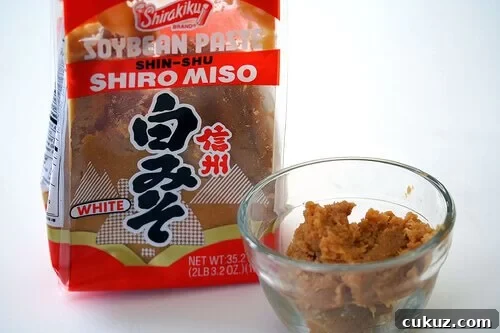
Store miso in an airtight container in the refrigerator for up to about six months. Press plastic wrap directly on the surface before sealing to minimize air exposure.
Top Tips
- Choose the miso type to match your flavor preference: white for mild, yellow for medium, red for robust.
- Avoid boiling the kombu or miso to keep the dashi clear and preserve delicate miso flavors and probiotics.
- Reuse spent kombu and katsuobushi to make a secondary, lighter dashi.
- Instant dashi is a useful shortcut, but fresh dashi delivers the best flavor when you have time.
More Ways to Use Miso
- Miso Salmon
- Miso Almond Sauce for salads or noodles
- Chicken Salad with Sesame Miso Dressing
- Miso Butter Shrimp appetizer
- Gyoza and various Japanese noodle dishes
Have you tried these methods for miso soup? Feel free to share your experience and any variations you enjoy.
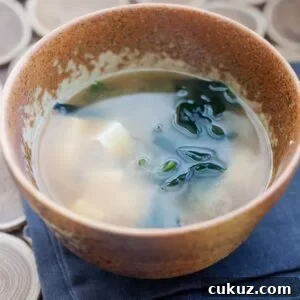
Miso Soup from Scratch
Jaden
Pin Recipe
Ingredients
- 4 cups water
- 1 piece kombu 4″x6″ piece kelp
- 1 ounce katsuobushi bonito flakes
- 3 tablespoon miso paste
- 4 ounces tofu
- 1 tablespoon dried wakame seaweed
Instructions
-
Wipe the kombu clean with a paper towel. Add the kombu and water to a saucepan and heat over medium-low. When small bubbles appear, remove the kombu.
-
Bring the liquid to a full boil, add katsuobushi all at once, boil for 60 seconds, then turn off heat and let steep undisturbed for 10 minutes.
-
Meanwhile, dice tofu and soak wakame until expanded; drain and discard soaking water.
-
After the bonito sinks, strain the dashi through cheesecloth or a fine-mesh strainer.
-
Return dashi to low heat, remove from heat, whisk in miso paste until dissolved, then add tofu and wakame and serve.