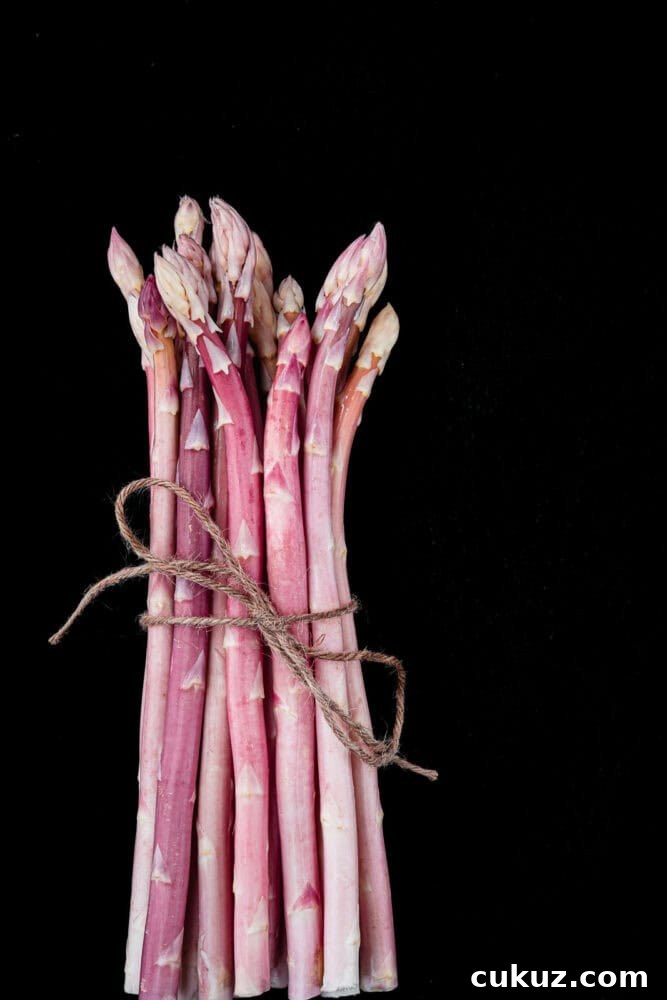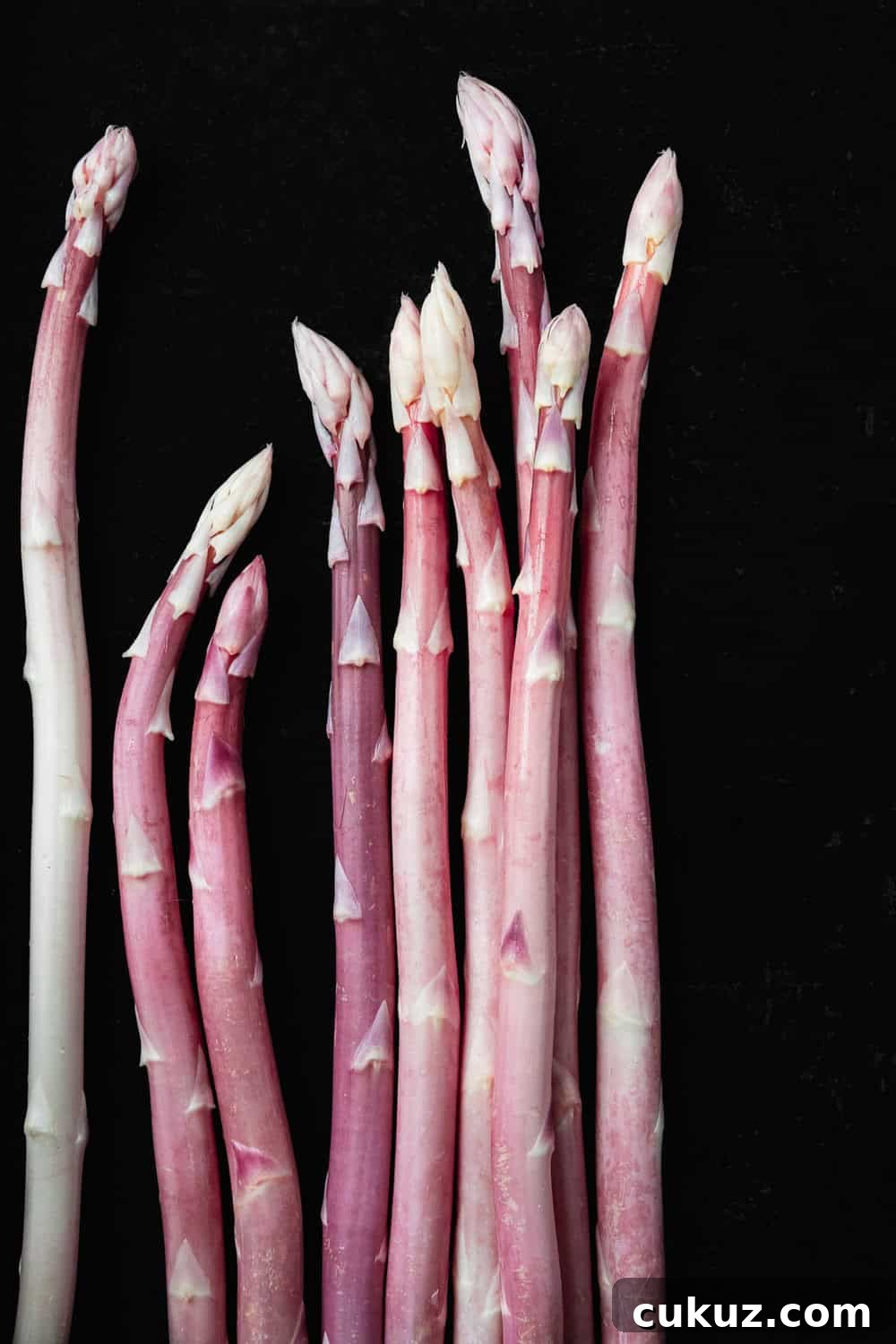
Green asparagus — the classic. White asparagus is grown underground without light. Purple varieties are rich in anthocyanins. And then there’s pink.
Pink asparagus is the sweetest, most tender sibling of green and the rarest color you’ll find in the patch.
What is Pink Asparagus?
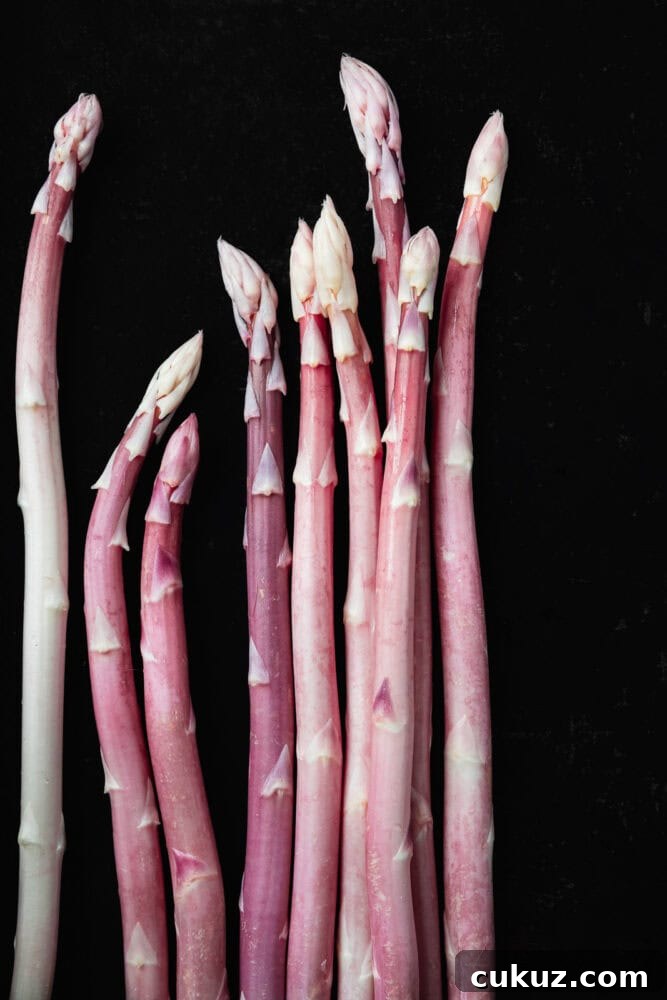
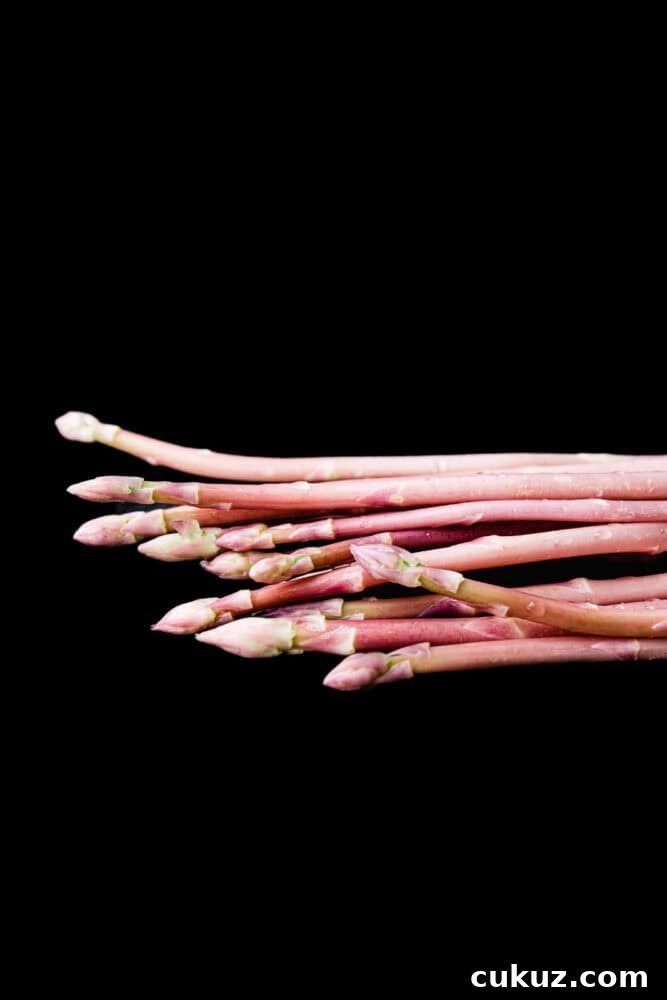
Pink asparagus describes spears that display a natural blush of pink, either because they come from a specific cultivar (for example, Italian Asparagus Rosa) or because of how they were cultivated.
All asparagus shoots start out without color. White asparagus are harvested after being grown in darkness so they never develop chlorophyll. Green asparagus develops its familiar color in full sun. Pink asparagus appears when shoots receive just a little light before harvest, which activates anthocyanins — plant pigments that produce that delicate pink hue.
In some cases, pink tones can also come from early oxidation of white asparagus. Whatever the cause, pink asparagus is strikingly beautiful and uncommon.
It’s a visual favorite: the pale blush against a dark backdrop feels almost momentary and special — the kind of produce that makes you pause and admire it.
Cooking with Pink Asparagus
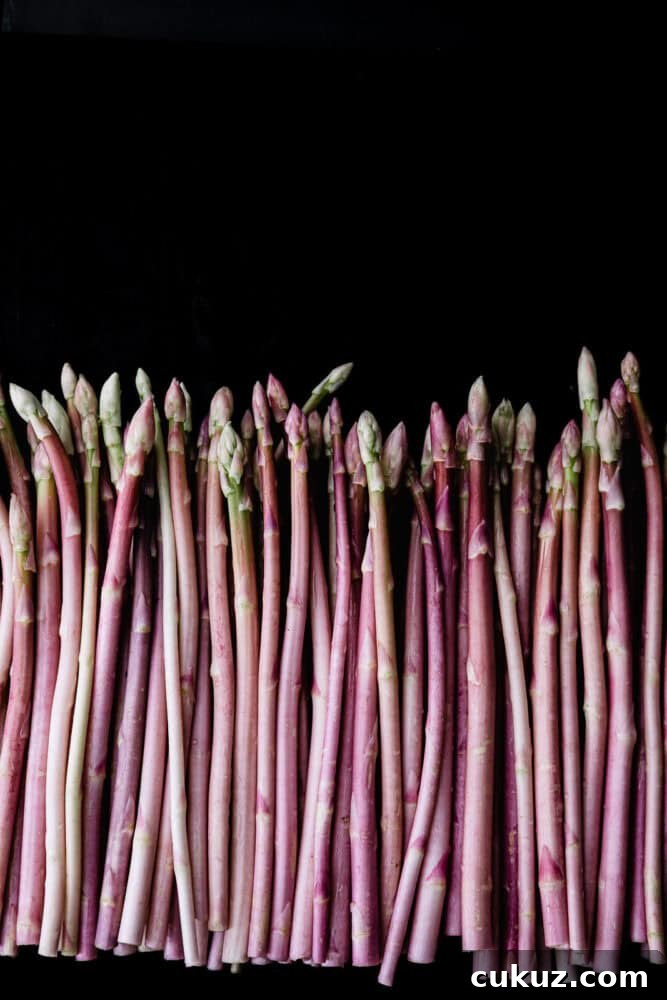
Flavor-wise, pink asparagus leans toward the sweet and mild profile of white asparagus rather than the grassy intensity of green. Texture-wise it behaves more like green asparagus: the skin is tender and usually doesn’t require peeling.
Keep in mind that the pink color is delicate and heat-sensitive. When exposed to cooking, the pigments fade and the spears often take on a muted green tone.
To preserve as much of the blush as possible, minimize cooking time: quick pickling, a brief blanch followed by an ice bath, or adding a splash of lemon or vinegar helps retain color and brightness. Raw preparations are also excellent — thinly shaved into salads, arranged as a vegetable carpaccio, or simply tossed with high-quality olive oil and flaky salt.
Of course, you don’t have to insist on keeping the pink. It’s delightful to admire raw, then give the spears a quick sear, grill, or broil to develop char and deepen flavor.
All asparagus colors are interchangeable in recipes, but pink asparagus is worth seeking out for its delicate flavor and the surprise of its appearance. If you see it at a farmers market, bring some home and experiment.
More Pink Produce
If pink asparagus caught your eye, there’s a whole realm of pink produce to explore. A few examples include:
- Pink pineapple — a lycopene-rich variety with a rosy tint.
- Pink apples — varieties with naturally pink flesh.
- Pink lemons — a slightly sweeter, more delicate take on the classic lemon.
- Pink oyster mushrooms — vivid, elegant mushrooms that also taste great cooked.
- Pink garlic — garlic varieties with rosy skins and a milder, slightly sweeter flavor.
If you find pink asparagus and want to share, tag me on Instagram @danielagerson — I love seeing what people do with seasonal, colorful produce.
There’s a wide and joyful world of colorful fruits and vegetables waiting to be explored. Bring more of it home, taste it, and play with it in the kitchen.
Let’s make waves in the kitchen.