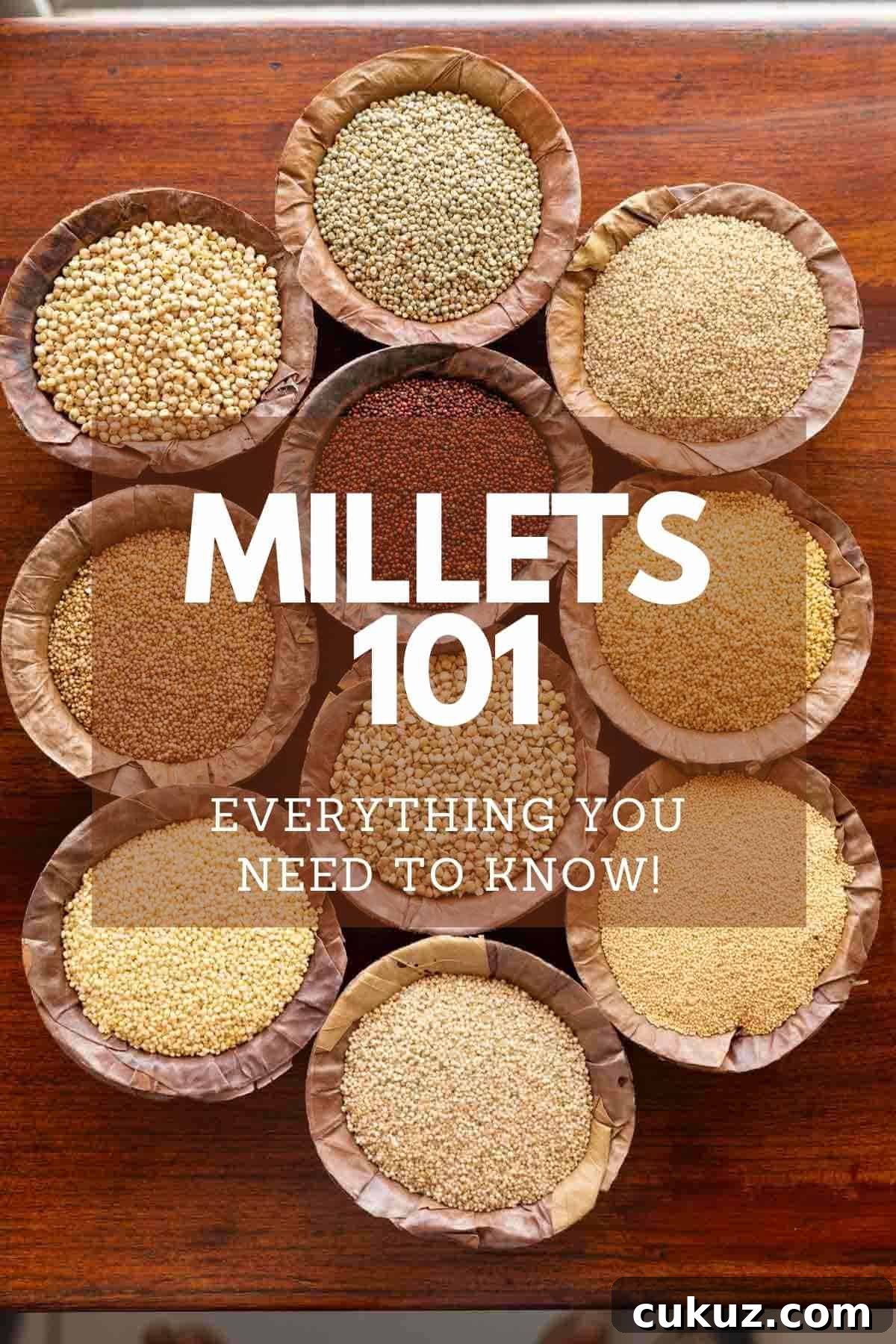
Millets may not be the most talked-about grains, but they deserve attention. Nutrient-dense, naturally gluten-free and incredibly versatile, millets are a healthy addition to any diet. Below is a clear, practical guide covering what millets are, how to cook and use them, benefits, and tips to include them regularly.
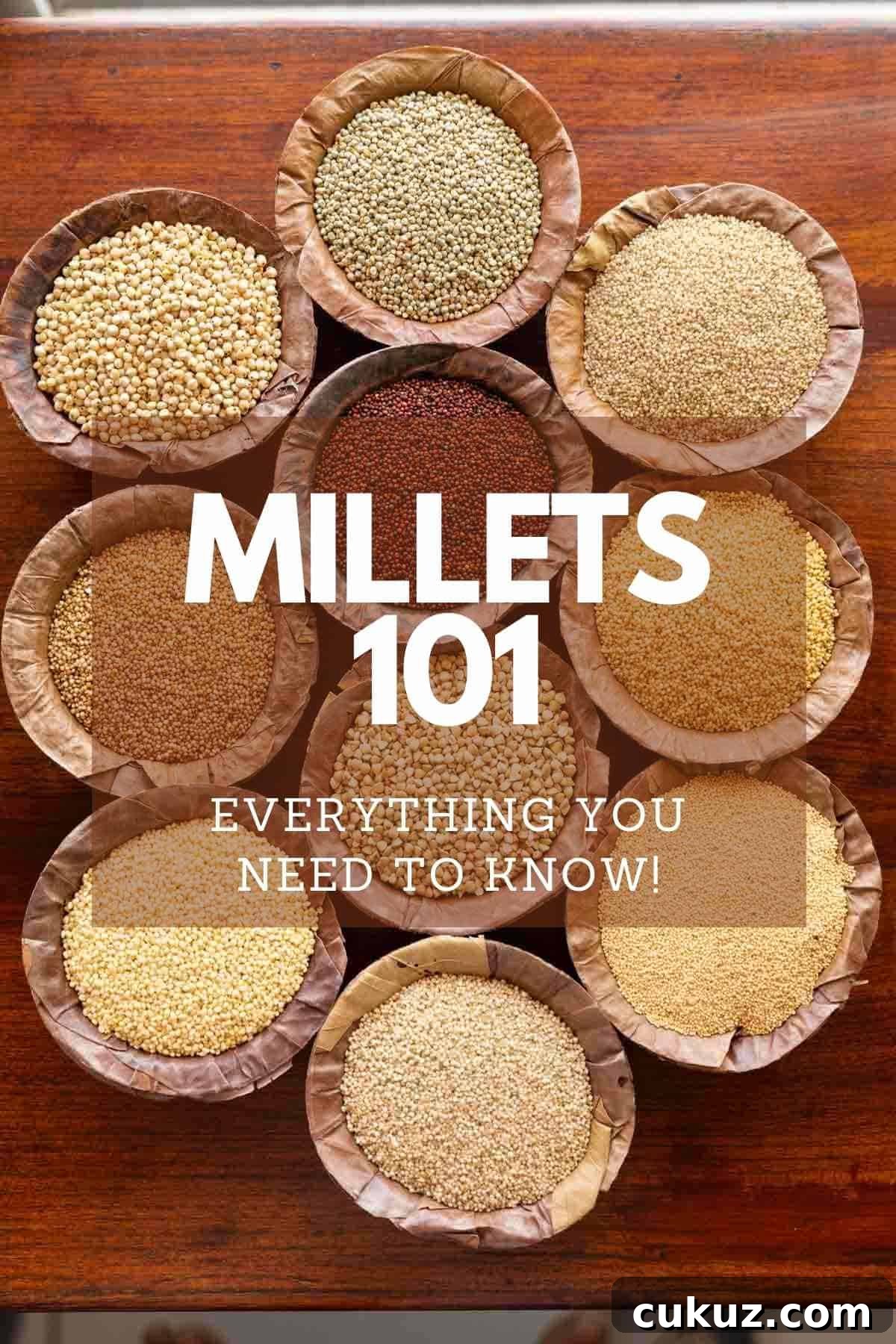
I didn’t grow up eating millets, but over the past few years they’ve become a regular part of my parents’ meals and are widely used where I live in Karnataka. I learned a lot experimenting with different varieties, and this guide distills that practical knowledge so you can start using millets with confidence.
What are millets?
Millets are small-seeded grasses from the Poaceae family. They’re grouped into major and minor millets based on seed size. There are also pseudo-millets that aren’t in Poaceae but share similar nutrients and culinary uses. Common examples you may already know include ragi (finger millet), bajra (pearl millet), jowar (sorghum), and amaranth — though many other varieties exist, each with distinct flavors and nutritional benefits. Millets work well in both sweet and savory dishes and can be prepared in numerous ways.
How to start eating millets?
- Swap regular noodles for millet noodles. Typical noodles made from refined flour offer little nutrition. Millet noodles provide more fiber, calcium and protein and are a wholesome alternative.
- Add millet flours to rotis. Start by mixing about 30% millet flour (jowar, bajra or ragi) into wheat flour. Gradually increase the millet proportion as you adapt to the flavor and texture.
- Make dosas, idlis and crepes. Millets ferment and taste great in batter-based dishes. They work well for both savory and sweet preparations.
- Replace rice or oats in porridges and khichdi. Millets can be cooked into comforting one-pot meals; foxtail millet, for example, makes a nutritious bisi bele bhaat.
- Use millets creatively. Try dhoklas, risottos (buckwheat is excellent), pulaos and salads using jowar or buckwheat.
- Because millets can have a mild dehydrating effect, increase your water intake when you introduce them to your diet.
- Millets are filling and take longer to digest, so serve portions slightly smaller than a typical rice serving.
How to cook Millets
Cooking millets can seem intimidating, but once you know the basics they’re straightforward. Different varieties have different soaking and cooking times. Soaking often speeds cooking and improves digestibility. The image below summarizes cooking methods for various millets.
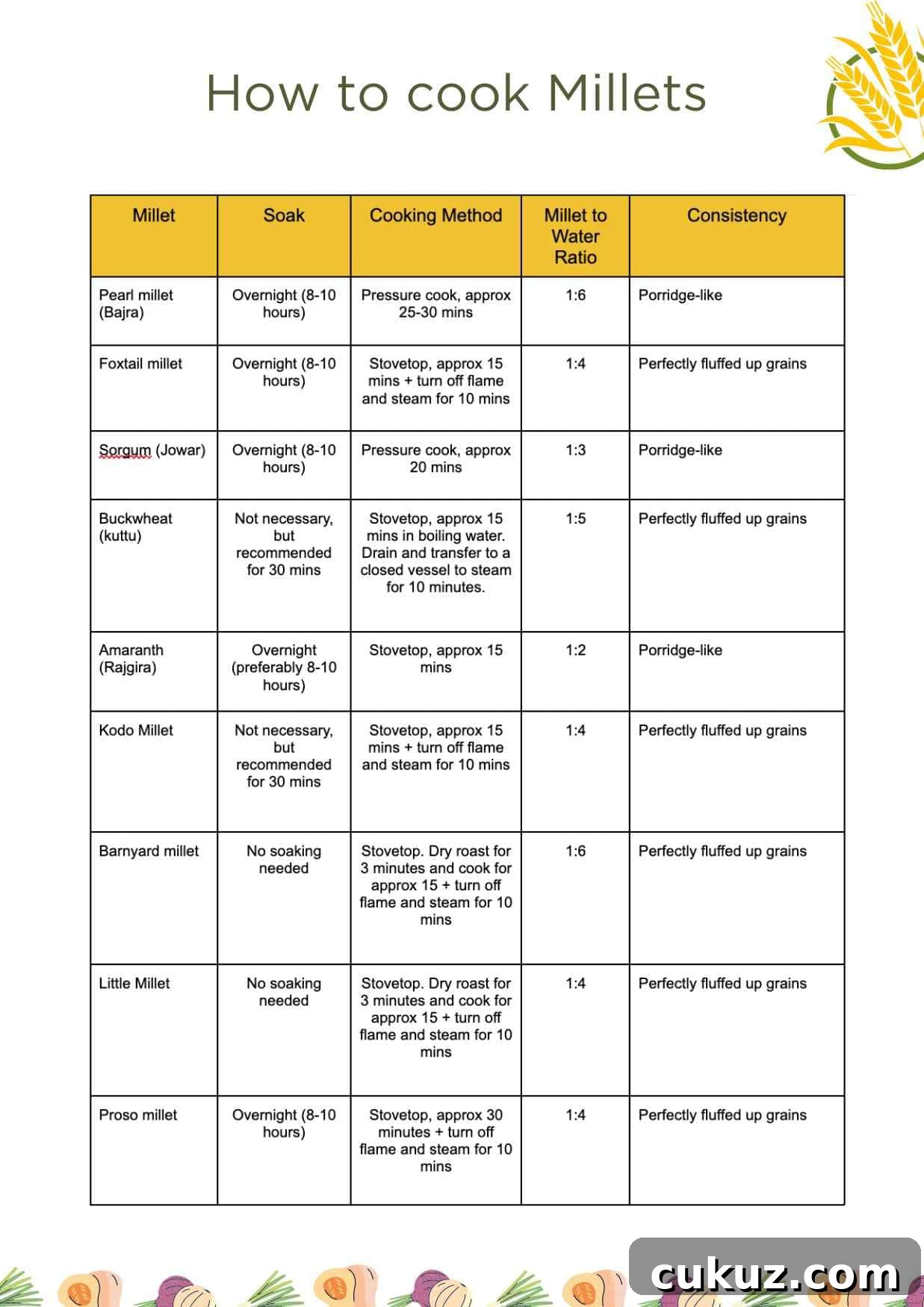
Note: Ragi is best used as flour or soaked and ground rather than cooked as whole grain — it takes a long time to cook and is not as appealing in grain form.
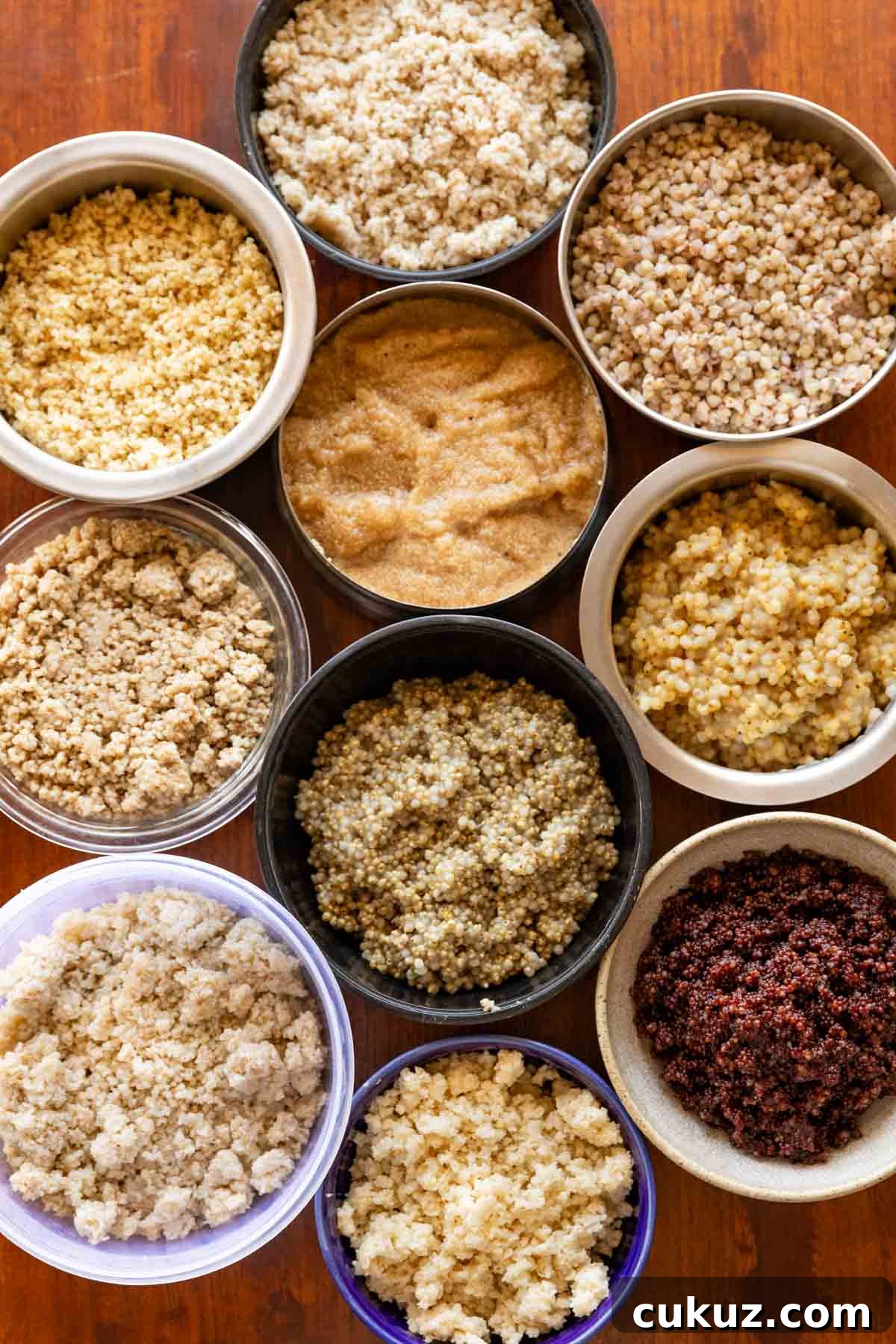
P.S. Here’s a picture of the millets I cooked while testing different methods:
How to use Millets
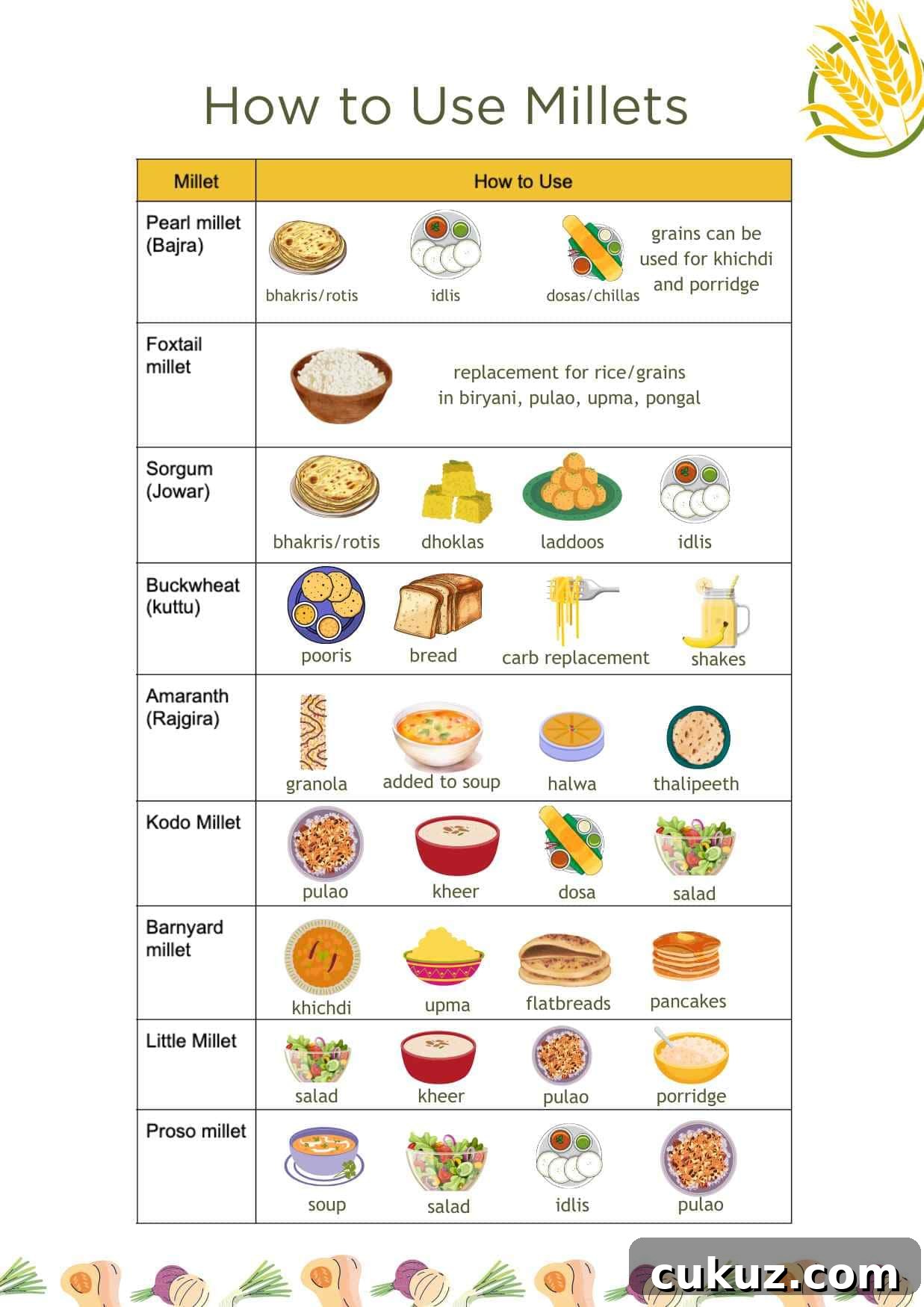
Millets are versatile. Since I started using them I’ve used millets in dosas, idlis, dhoklas, rotis, crepes, salads, soups, risottos, parathas, pulaos, khichdis and desserts. The infographic below shows many suitable pairings and dish ideas to inspire you.
Top Tips to cook Millets
- Rinse thoroughly until the water runs clear to remove dust and debris.
- Soak millets before cooking. Soaking shortens cooking time, aids digestion and improves nutrient absorption.
- Discard the soaking water and cook using fresh water.
- Use a pot with a tight-fitting lid to trap steam and cook evenly.
- Reduce heat after the first boil and simmer on low until cooked.
- Ensure millets are fully soft. Chewy or hard grains indicate undercooking; undercooked millet may cause digestion issues and dehydration.
Benefits of Millets
- High in dietary fiber: Millets support digestive health, helping reduce bloating and constipation while regulating bowel movements.
- Low glycemic index: Millets release glucose slowly, preventing sharp blood sugar spikes and helping with satiety—beneficial for blood sugar control.
- Good vegan protein source: Millets help meet protein needs for vegetarian and plant-forward diets.
- Nutrition-dense: They contain antioxidants, calcium, iron, zinc, B vitamins and folic acid, contributing to heart and vascular health and helping manage cholesterol.
- Low calorie and low fat: Their fiber content and low calorie count make millets a helpful component of weight-management diets.
- Gluten-free: Naturally gluten-free, millets are suitable for people with gluten sensitivity and can replace wheat in many recipes.
Note: Some millets may affect thyroid function in sensitive individuals. If you have hypothyroidism, consult a doctor before regularly adding millets to your diet.
Frequently Asked Questions
Millets are healthy but can have warming or cooling effects. Varieties like sorghum, ragi, foxtail, barnyard and kodo tend to have cooling properties and suit warmer months; pearl millet, amaranth and buckwheat are more warming and suit cooler months. If you’re new to millets, begin with 3–4 times a week and gradually increase to daily if it suits you.
People with hypothyroidism should consult their doctor before regularly consuming millets, as some types may affect thyroid function.
Cooking time varies by variety and whether grains are soaked. Soaked millets cook much faster. Little millet is one of the quickest, cooking in about 15 minutes; other millets generally take longer—refer to cooking charts for specifics.
Yes, compared with refined grains, millets digest more slowly due to fiber and complex carbohydrates. That slower digestion helps maintain stable blood sugar and keeps you feeling full longer.
Except for little millet, soak most millets for at least one hour and ideally 4–8 hours. Major millets like sorghum, pearl and foxtail often benefit from longer soaking; minor millets like buckwheat, amaranth and kodo require shorter soaking.
Sorghum (jowar), pearl millet (bajra) and finger millet (ragi) grind well into flours suitable for making rotis.
If you haven’t tried millets yet, consider experimenting with a few varieties to find what you like. Though the taste can take some getting used to, the health benefits and culinary flexibility make it worthwhile. Explore millet recipes such as chocolate ragi pancakes, millet mysore masala dosa, or a foxtail millet bisi bele bhaat to begin your millet journey.