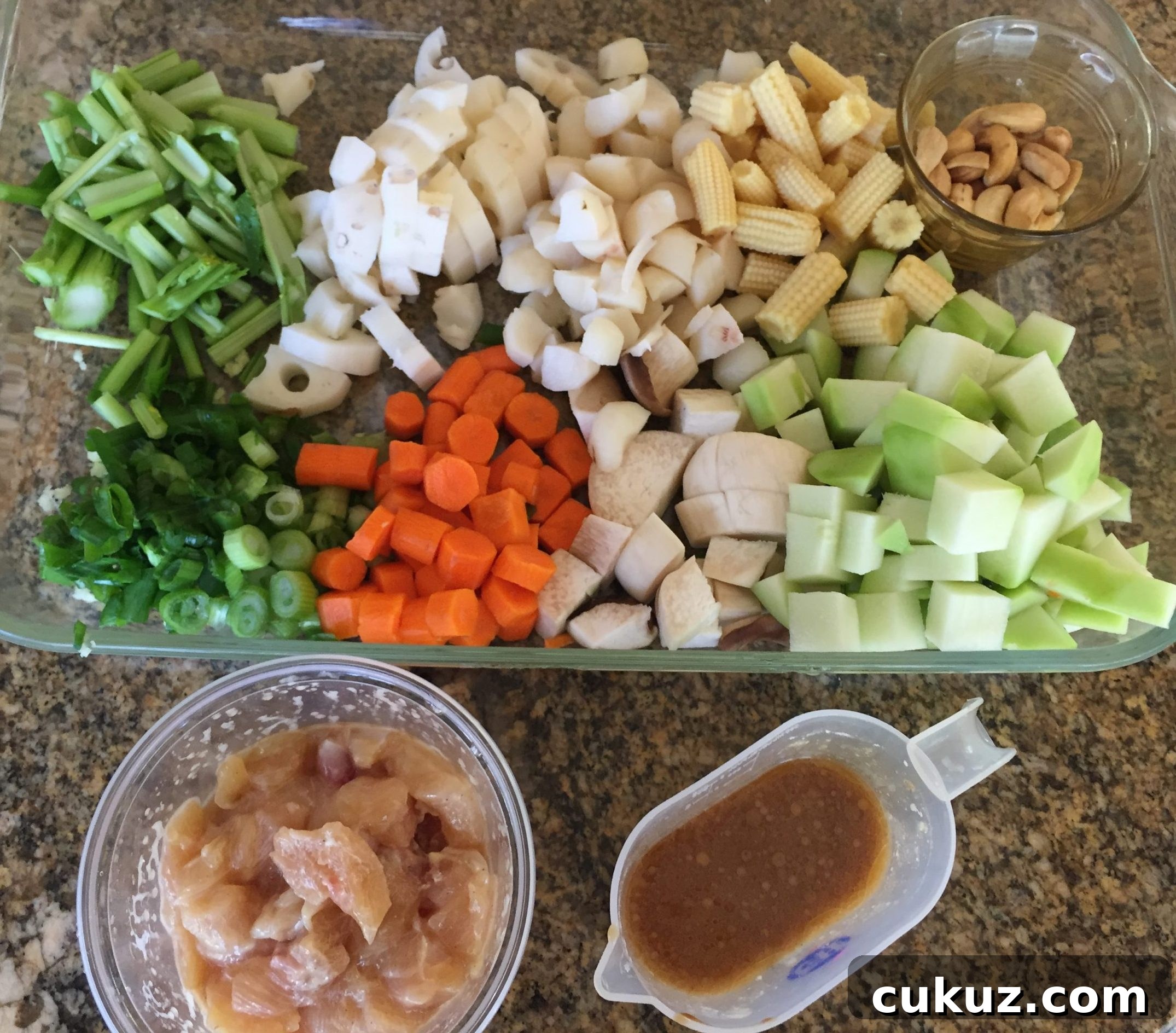
UPDATE: 11/25/2021 I’ve added a video showing how I make the bulk basic stir-fry sauce and aromatics. After years in restaurants I found it’s much more efficient to keep a ready-made stir-fry sauce and aromatics in the fridge. It speeds dinner prep and encourages family members to throw together a healthy stir-fry because the work of assembling the marinade, sauce and aromatics is already done. The bulk stir-fry sauce is shelf-stable in the refrigerator for several months.
To me, a great stir-fry has tender, well-marinated meat, plenty of colorful vegetables, and a light sauce that enhances the ingredients without overwhelming them.
When my daughters were small I used a lot more sauce because they loved it. As they grew older I reduced the amount of sauce to let the natural flavors of the ingredients shine. That said, the amount of sauce is a matter of personal preference.
Chinese cuisine offers a wide range of flavors, but there is a reliable basic stir-fry sauce that works for most dishes. Use this clear Cantonese-style sauce as a foundation and then build flavors on top of it: add chilies for heat, black bean sauce for depth, or a dash of dark soy and brown sugar for a richer northern-style brown sauce.
Tips for making a basic Chinese stir-fry sauce
The right amount of sauce is important: vegetables and protein should be coated in a thin layer of flavor, not swimming in liquid. Too much sauce turns the dish into a stew.
Most stir-fry sauces start with oyster sauce, light soy sauce, a little sugar, sesame oil, Chinese rice wine, and liquid (water or chicken stock), with cornstarch used to thicken. You can mix a concentrate (omit the water) and add water or stock later, or prepare a ready-to-use batch and refrigerate it for convenience.
Cornstarch
Cornstarch mixed with water is necessary so the sauce will cling to the ingredients.
- Make the sauce before you start stir-frying.
Prepare the sauce ahead of time so you don’t have to mix it while vegetables are cooking and risk overcooking them.
- Stir the cornstarch mixture just before pouring it in.
Cornstarch settles, so give the sauce a quick stir before adding it to the wok. Pour it down the side of the wok so the hot metal helps the sauce thicken as it runs in.
- Cook the sauce until it thickens fully.
If the cornstarch isn’t cooked through, the sauce can feel gritty. Cook until smooth and glossy.
- Don’t add dry cornstarch directly to a hot pan.
Adding dry cornstarch will create lumps. Always dissolve it in water or stock first.
Oyster sauce
Oyster sauces vary in taste and quality. Premium brands are more flavorful and I reserve them for dipping, while standard cooking varieties work well in stir-fries. If you prefer MSG-free options, look for those labeled accordingly. There are also vegetarian versions that use shiitake mushroom extracts.
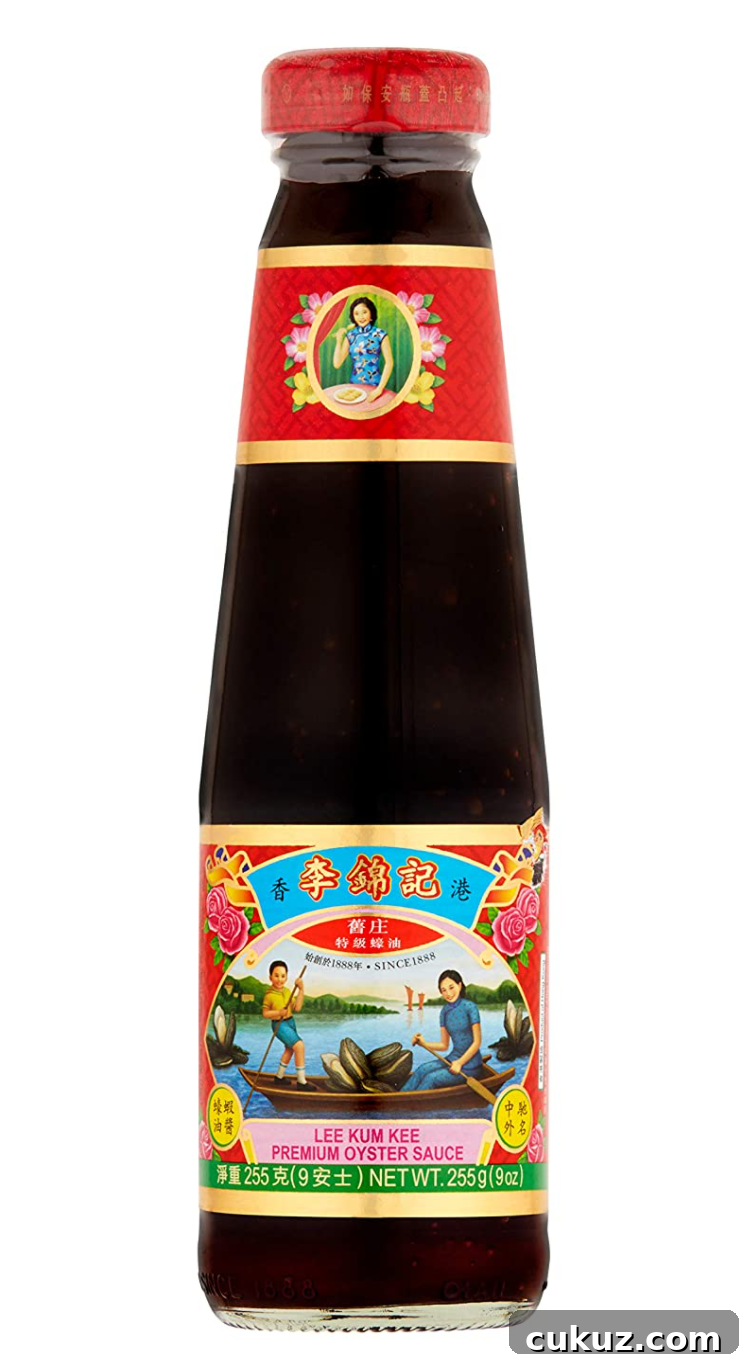
Premium oyster sauce (great for dipping).
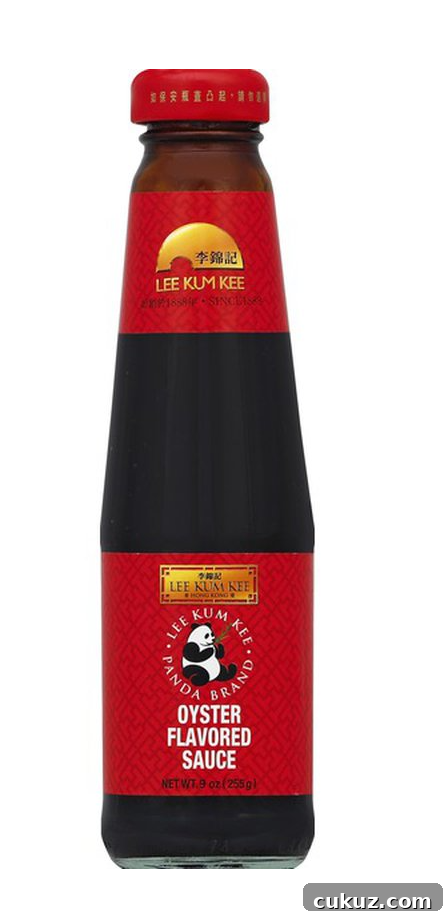
Regular oyster sauce (for cooking).
Bouillon powders
I prefer chicken bouillon powder over cubes because the powder can be sprinkled at the end to adjust seasoning. I choose MSG-free bouillon powders when possible. The sauce itself does not require bouillon, but you can add a small amount after tasting to lift the savory notes. Mushroom bouillon is a good vegetarian substitute.
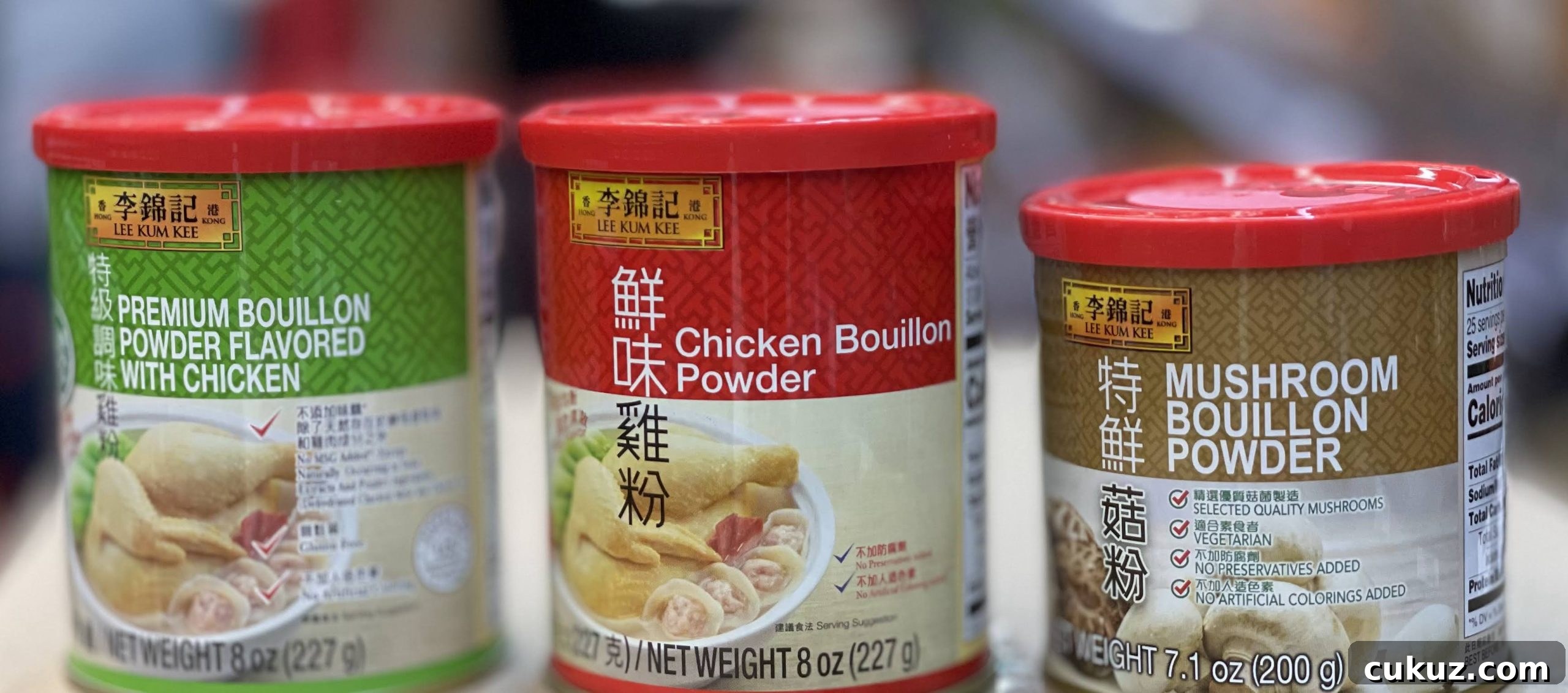
Bouillon powders can be used to adjust seasoning at the end.
Black bean sauce
Black bean sauce is made from fermented salted black beans mixed with garlic. It adds a savory, briny depth to stir-fries.
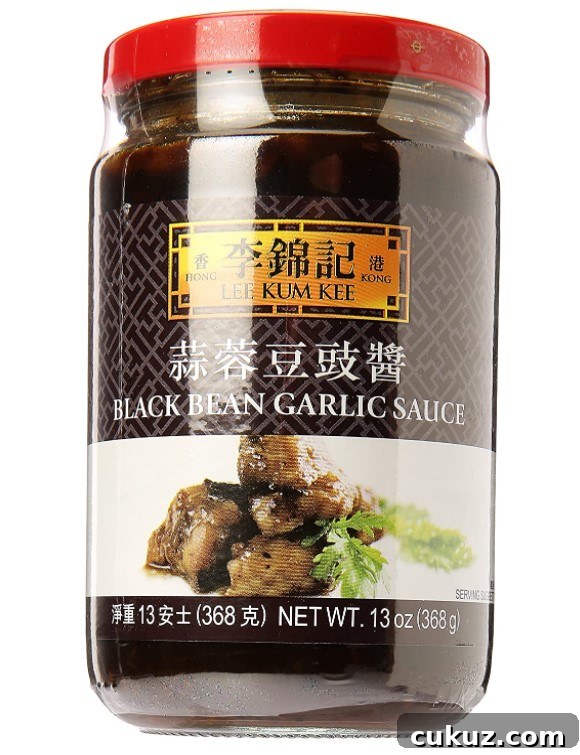
Black bean sauce provides savory umami to dishes.
Other sauces and regional styles
Southern-style “clear” sauce
The Cantonese clear sauce is lighter in color and flavor, and pairs well with vegetables, chicken, and pork.
Northern-style brown sauce
The northern brown sauce is darker and bolder, often used with beef or lamb. It typically includes dark soy sauce and brown sugar for a deeper color and flavor.
Hunan / Szechuan spicy sauce
For spicy stir-fries, add dried chilies and Szechuan peppercorns for heat and numbing spice.
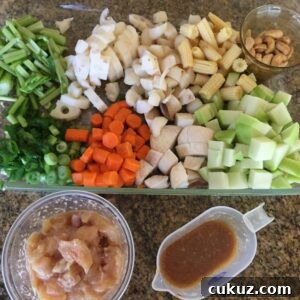
CHINESE STIR-FRY “CLEAR” SAUCE
Universal Cantonese stir-fry sauce that works in almost any stir-fry.
Ingredients (serves 4)
- 64 g water
- 2 tsp cornstarch
- 1/2 tsp sugar
- 2 Tbsp oyster sauce
- 2 tsp light soy sauce
- 1 Tbsp Chinese rice wine
- 1 tsp sesame oil
- 1/2–1 tsp chicken bouillon powder (optional, to taste)
Instructions
- Combine all ingredients in a bowl and stir well. Stir the mixture again before pouring it into the wok or pan.
- After stir-frying, taste and add chicken bouillon if additional saltiness is needed.
Notes
To make 1/4–1/3 cup of sauce for a single stir-fry: combine 1/4–1/3 cup water, 2 tsp cornstarch, and 2–4½ Tbsp of the prepared stir-fry sauce. If more salt is needed after the sauce is added, add 1/4–1/2 tsp chicken bouillon.
Nutrition (per serving)
Calories: 27 kcal; Carbs: 3 g; Protein: 1 g; Fat: 1 g; Sodium: 474 mg.
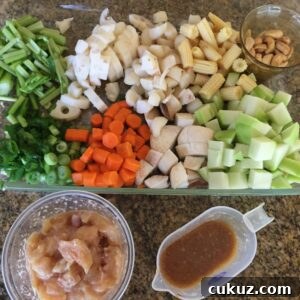
BULK CHINESE STIR-FRY “CLEAR” SAUCE
A larger batch of the clear sauce that covers most stir-fry needs. Refrigerate and use within a few months for quick, consistent results.
Ingredients (makes about 10 servings)
- 25 g sugar
- 150 ml oyster sauce
- 100 ml light soy sauce
- 125 ml Chinese rice wine
- 50 ml sesame oil
- Water (as needed)
- Cornstarch (for thickening when using)
- Chicken bouillon (optional, to taste)
Instructions
- Combine all ingredients and refrigerate until needed.
- When using the sauce for a single stir-fry: mix 1/4–1/3 cup water with 2 tsp cornstarch and 2–4½ Tbsp of the bulk sauce. Stir before adding to the wok.
- Taste after cooking and add chicken bouillon if extra saltiness is required.
Video
Notes
For one stir-fry portion, combine 1/4–1/3 cup water, 2 tsp cornstarch and 2–4½ Tbsp of bulk sauce. Adjust salt with 1/4–1/2 tsp chicken bouillon if necessary.
Nutrition (per meal)
Calories: 84 kcal; Carbs: 5 g; Protein: 1 g; Fat: 5 g; Sodium: 969 mg.
If you try this recipe, let me know how it turned out or if you have any questions. I love seeing photos—tag #sammywongskitchen on social media if you share your dish.