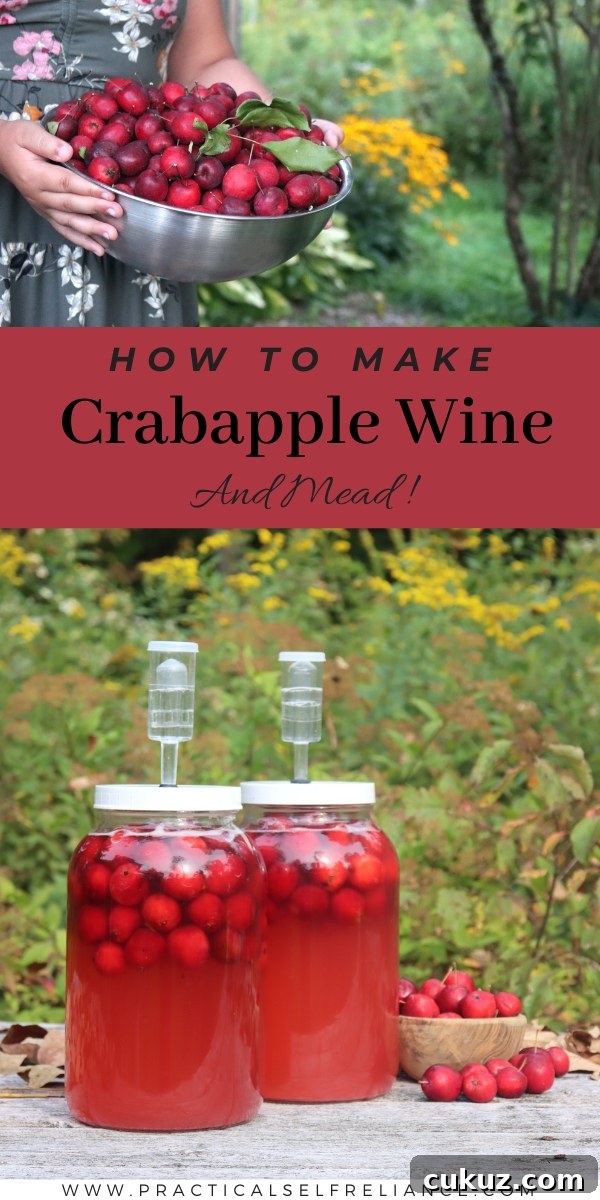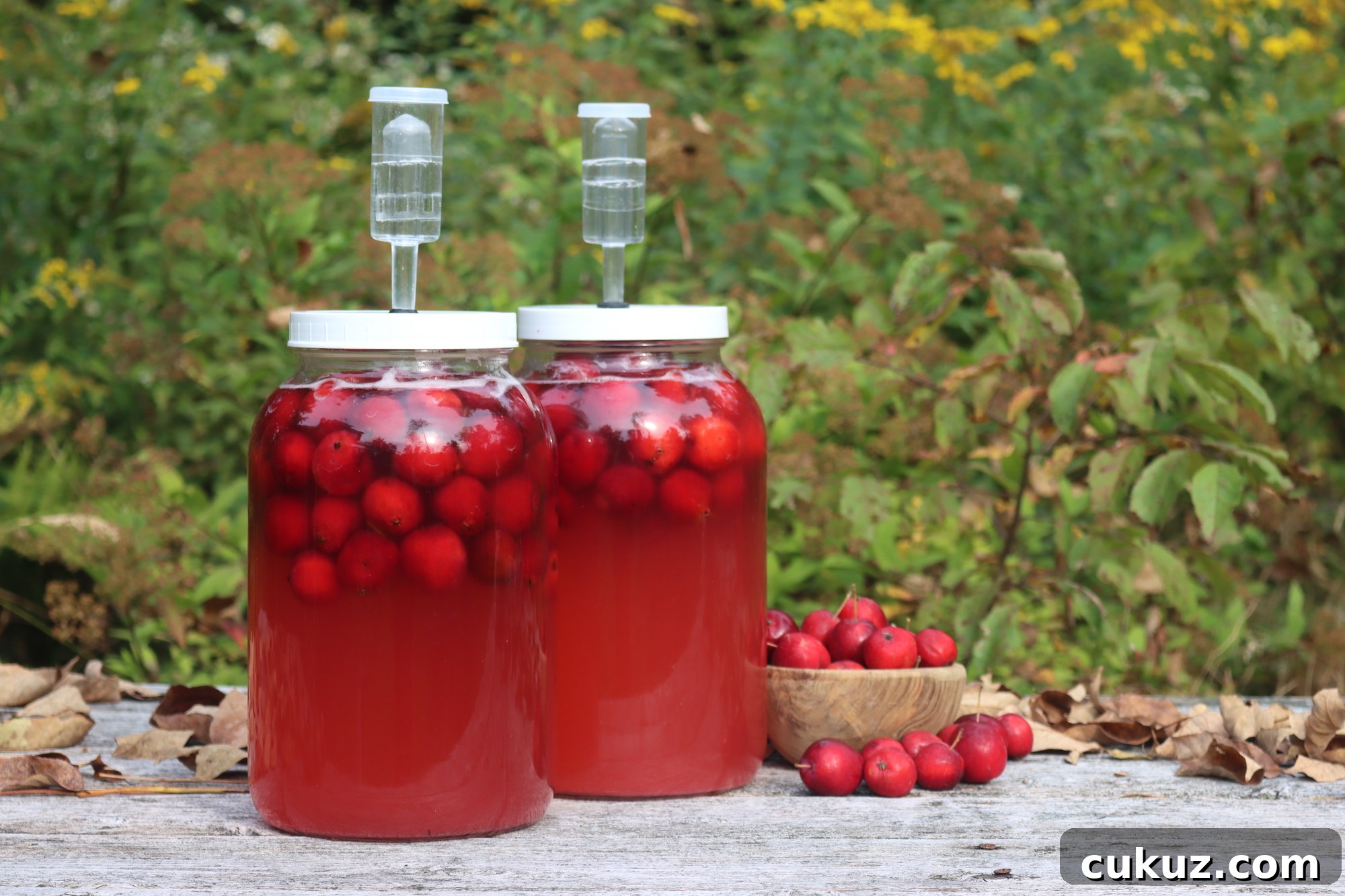
Crabapple wine is a great way to use crab apples that might otherwise go to waste. You can also make crabapple mead by replacing the sugar with honey for a similarly delicious result.
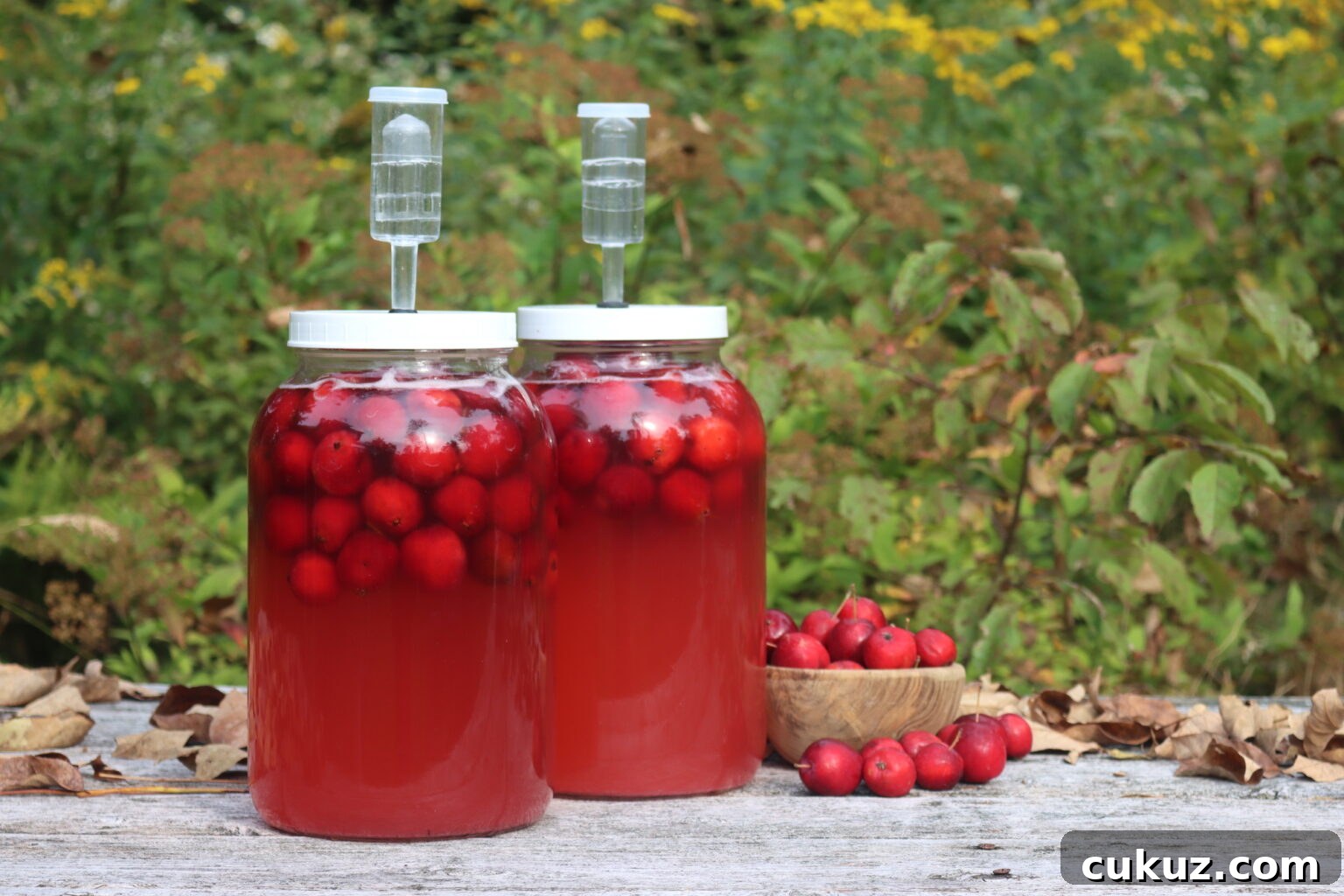
Crab apples are often thought of as tart and astringent, but their flavors vary widely. Some varieties, like the Dolgo crabapple, yield fruit with a pleasant sweet-tart character reminiscent of sweetened cranberry.
Because crabapple varieties differ in sweetness and acidity, the final flavor and color of your wine will depend largely on the fruit you choose. That said, crabapple wine typically finishes on the dry side and makes a crisp, flavorful country wine.
Choose ripe crab apples for the best results. They should yield slightly to pressure but not be mushy. Since skin color varies by variety, use texture and seed color to judge ripeness: cut open a few apples—ripe crab apples usually have brown seeds rather than green or white.
Making crabapple wine follows the same basic steps as other small-batch country wines: crush the fruit, add sweetener (sugar or honey for mead), include a few standard winemaking additives, and pitch a good wine yeast.
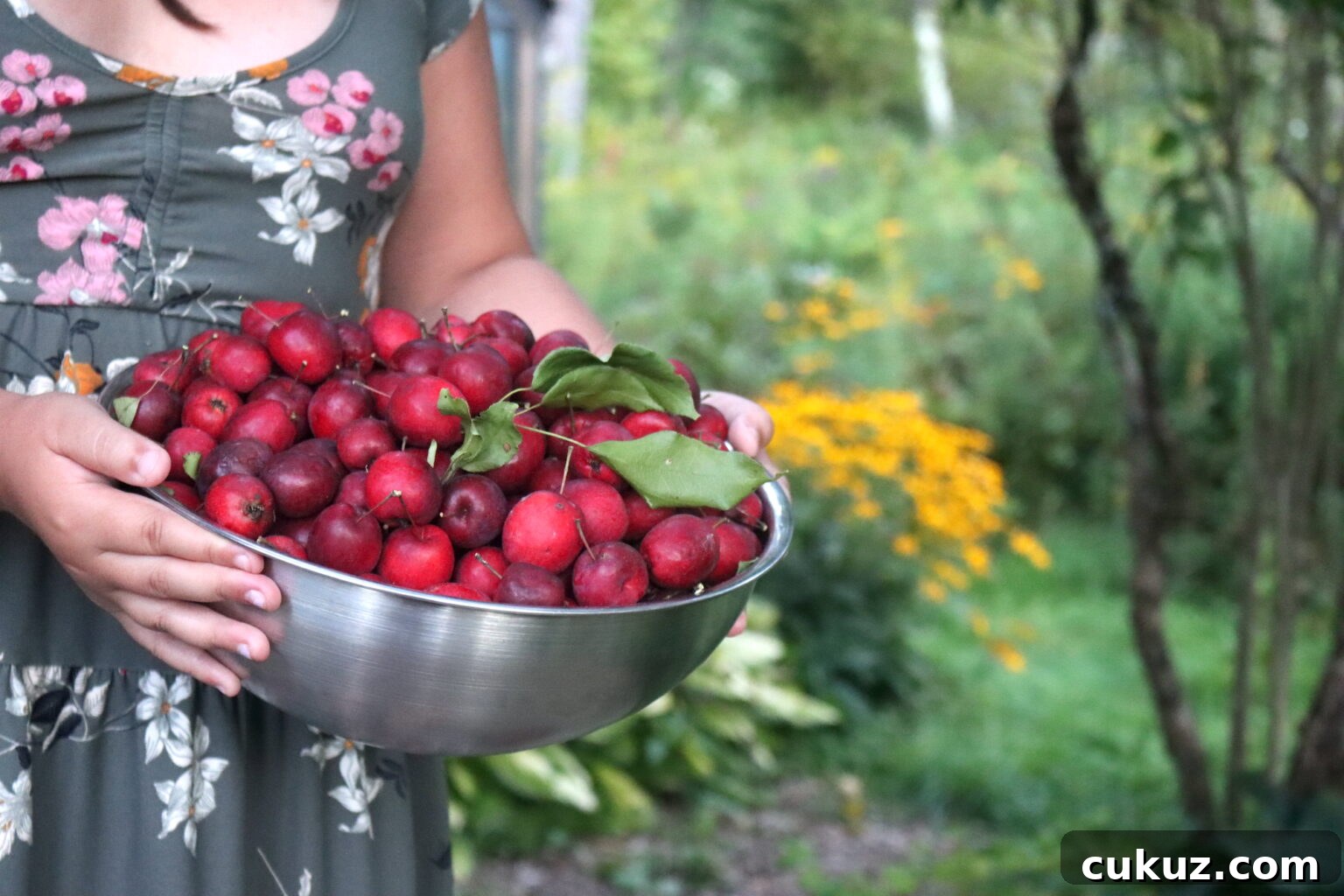
Primary fermentation will last about 7–10 days and will be most active during that time. When bubbling slows, siphon the wine off the fruit and sediment into a clean vessel for secondary fermentation. This slower stage takes place in a cool, dark spot and can last from two to six months.
After sufficient aging, bottle the wine and allow it to mature. With basic equipment and ingredients, crafting crabapple wine is straightforward and rewarding.
If you’re new to winemaking or want a refresher on terms and techniques, there are guides that cover the complete process, mead-making differences, necessary equipment, common ingredients, and yeast selection.
Ingredients for Crab Apple Wine
Gather your ingredients before you begin. If you want to understand each item’s role or possible substitutions, consult a basic guide to winemaking ingredients.
For a one-gallon batch, you will need:
- 4 lbs ripe crab apples
- 2 lbs granulated sugar (about 4 cups)
- 1 tsp yeast nutrient
- ½ tsp acid blend
- ¼ tsp wine tannin
- ½ tsp pectic enzyme
- Wine yeast (champagne yeast recommended)
- Water (to top up)
Pectic enzyme helps the wine clear by breaking down pectin. Acid blend and tannin add balance and structure. If you prefer mead, replace the sugar with 2½–3 lbs (about 1 quart) of honey; wild honey works best.
Yeast for Crabapple Wine
Champagne yeasts are a good choice for crabapple wine because they ferment cleanly and tolerate higher alcohol. Common options include Red Star Premier Blanc, Red Star Premier Cuvée, and Lalvin EC-1118. These strains are vigorous fermenters with neutral flavor profiles and alcohol tolerances typically around 15% under normal conditions.
Choose a yeast that suits your desired finish—these examples will produce a fairly dry wine, though you can back-sweeten later if preferred. Maintain fermentation temperatures within the yeast’s recommended range for best results.
You’ll also need basic equipment: a one-gallon wide-mouth fermentation vessel for primary, a one-gallon glass carboy for secondary with an airlock and stopper, an auto-siphon, bottles and corks (or flip-top bottles), a bottle corker, and a brewing sanitizer.
Making Crab Apple Wine
Start by washing the crab apples. You can leave the skins on, but remove stalks and try not to crush or cut the seeds to avoid off-flavors.
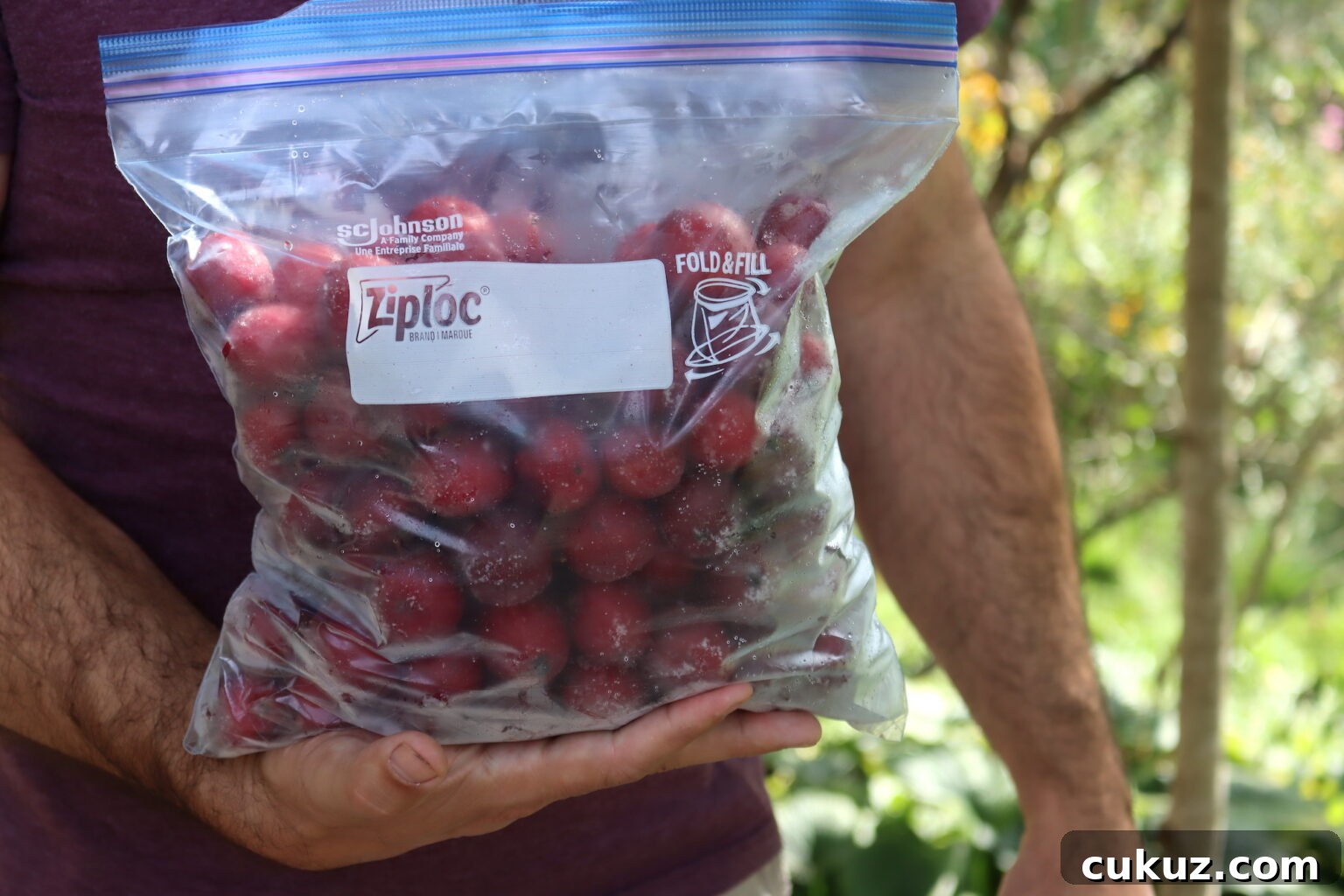
Crush the apples by hand, with a hardwood mallet, or using an apple crusher or press. Freezing the fruit for a week and then thawing softens it and reduces pectin content, which helps with clarification.
Place the crushed apples into your wide-mouth primary vessel. Boil a few quarts of water, dissolve the sugar in it, and pour the hot sugar water over the fruit. Allow the mixture to cool to lukewarm.
When lukewarm, add yeast nutrient, pectic enzyme, acid blend, and tannin. Rehydrate the yeast in a small amount of room-temperature water for ten minutes, then add it to the must. Top up with water, leaving about two inches of headspace, seal with an airlock, and ferment for about seven days.
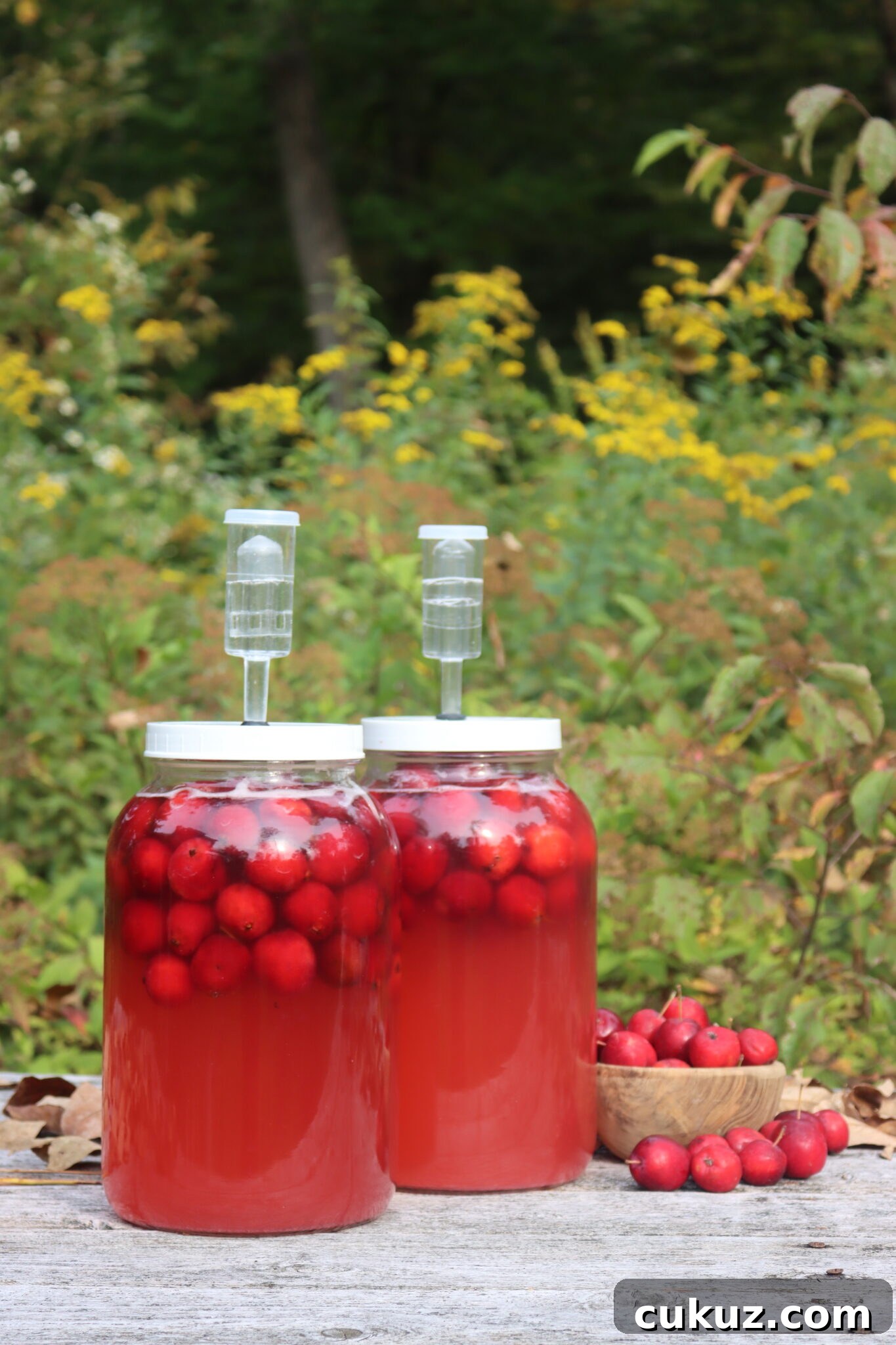
After primary fermentation slows, siphon the wine into a clean carboy for secondary, leaving sediment and fruit behind. Top up to the neck if needed and seal with a water lock. Rack the wine every two months and sample after the third racking.
If the wine tastes too dry, backsweeten before bottling. To stabilize, add one Campden tablet and ½ teaspoon potassium sorbate, wait 24–48 hours, then add a simple syrup (equal parts sugar and water). For a one-gallon batch, start with about ½ cup sugar and adjust to taste. If you choose not to stabilize, allow the wine to ferment out any added sugar completely before bottling to avoid pressure buildup in bottles.
When the wine is clear and balanced, bottle and cork it. For the best flavor, age the bottles for about a year before drinking.
Ways to Preserve Crab Apples
If you have a surplus of crab apples, consider other preserves and preparations besides wine:
- Crabapple jelly
- Pickled crabapples
- Crab apple sauce
- Various crabapple recipes and preserves
Crabapple Wine (& Mead)
Equipment
-
One Gallon Wide Mouth Carboy
-
Air Lock & Stopper
-
Winemaking Auto-Siphon
-
Wine Bottles
-
Wine Corks
-
Bottle Corker
Ingredients
- 4 lbs crab apples, fully ripe
- 2 lbs Sugar, about 2 cups per pound
- 1 tsp yeast nutrient
- ½ tsp acid blend
- ½ tsp pectic enzyme
- ¼ tsp tannin powder
- 1 packet wine yeast, see note
- Water, to fill
- Optional ~ Campden Tablet and Potassium Sorbate for Stabilizing, optional
Instructions
-
Wash the crab apples and remove stalks. Skins may be left on.
-
Crush the apples by hand, with a mallet, or use an apple crusher. Freezing and thawing first softens them.
-
Place crushed apples in a wide-mouth primary vessel.
-
Heat a few quarts of water, dissolve the sugar, and pour the syrup over the fruit. Let cool to lukewarm.
-
Add yeast nutrient, pectic enzyme, acid blend, and tannin when the must is lukewarm.
-
Rehydrate the yeast in room-temperature water for about ten minutes, then add it to the must.
-
Top up with water, leaving approximately 2 inches of headspace. Fit an airlock and ferment in primary for seven days.
-
Siphon to a clean carboy for secondary, leaving sediment and fruit behind. Top up and seal with an airlock.
-
Rack every two months and taste after the third racking. Back-sweeten or adjust as needed before bottling.
-
If backsweetening, stabilize first (Campden tablet + potassium sorbate), wait 24–48 hours, then add a simple syrup. Allow time to ensure fermentation has ceased before bottling.
-
Bottle when clear and stable. Age for about a year for the best drinking quality.
Notes
Amount of Crab Apples
Use about 4 lbs of ripe crab apples for each one-gallon batch.
Crabapple Mead
For mead, substitute roughly 1 quart (about 3 lbs) of honey for the sugar. Fermentation and conditioning times may be longer with honey.
Yeast
Select a clean-fermenting wine yeast with moderate alcohol tolerance. Champagne yeasts like Red Star Premier Blanc, Red Star Premier Cuvée, or Lalvin EC-1118 work well and yield drier wines.
Stabilizing and Backsweetening
To backsweeten safely, stabilize the wine first with a Campden tablet and potassium sorbate, wait 24–48 hours, then add simple syrup to taste. If you skip stabilizing, allow any restarted fermentation to finish completely before bottling to avoid bottle pressure issues.
Nutrition
Nutrition information is an estimate and should be used as an approximation.
Winemaking Recipes
If you enjoy seasonal winemaking, there are recipes for a wide range of fruits, flowers, and vegetables, including apple wine, cranberry wine, elderberry wine, peach wine, persimmon wine, plum wine, beetroot wine, and parsnip wine.
- Apple Wine
- Cranberry Wine
- Elderberry Wine
- Peach Wine
- Persimmon Wine
- Greengage Plum Wine
- Beetroot Wine
- Parsnip Wine