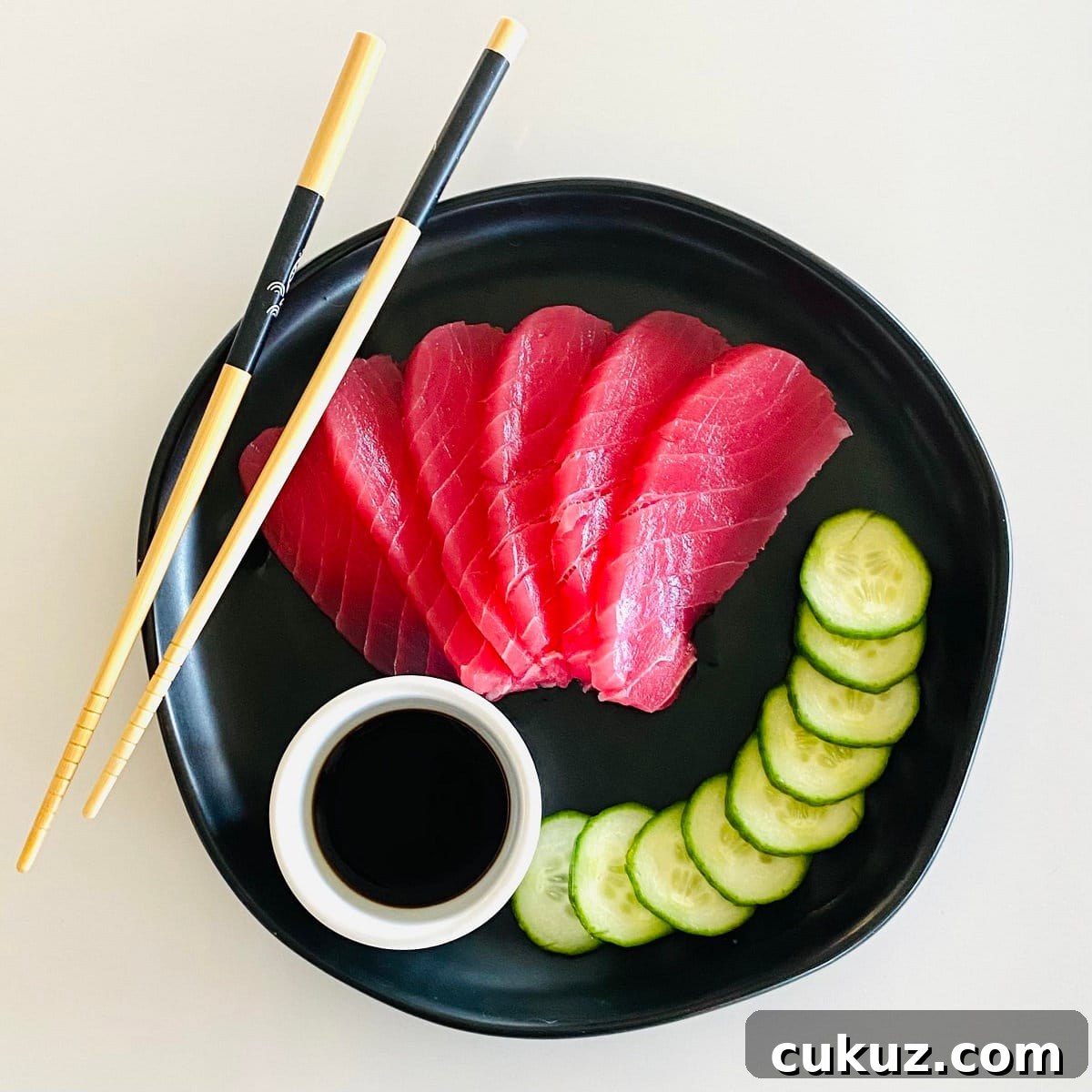
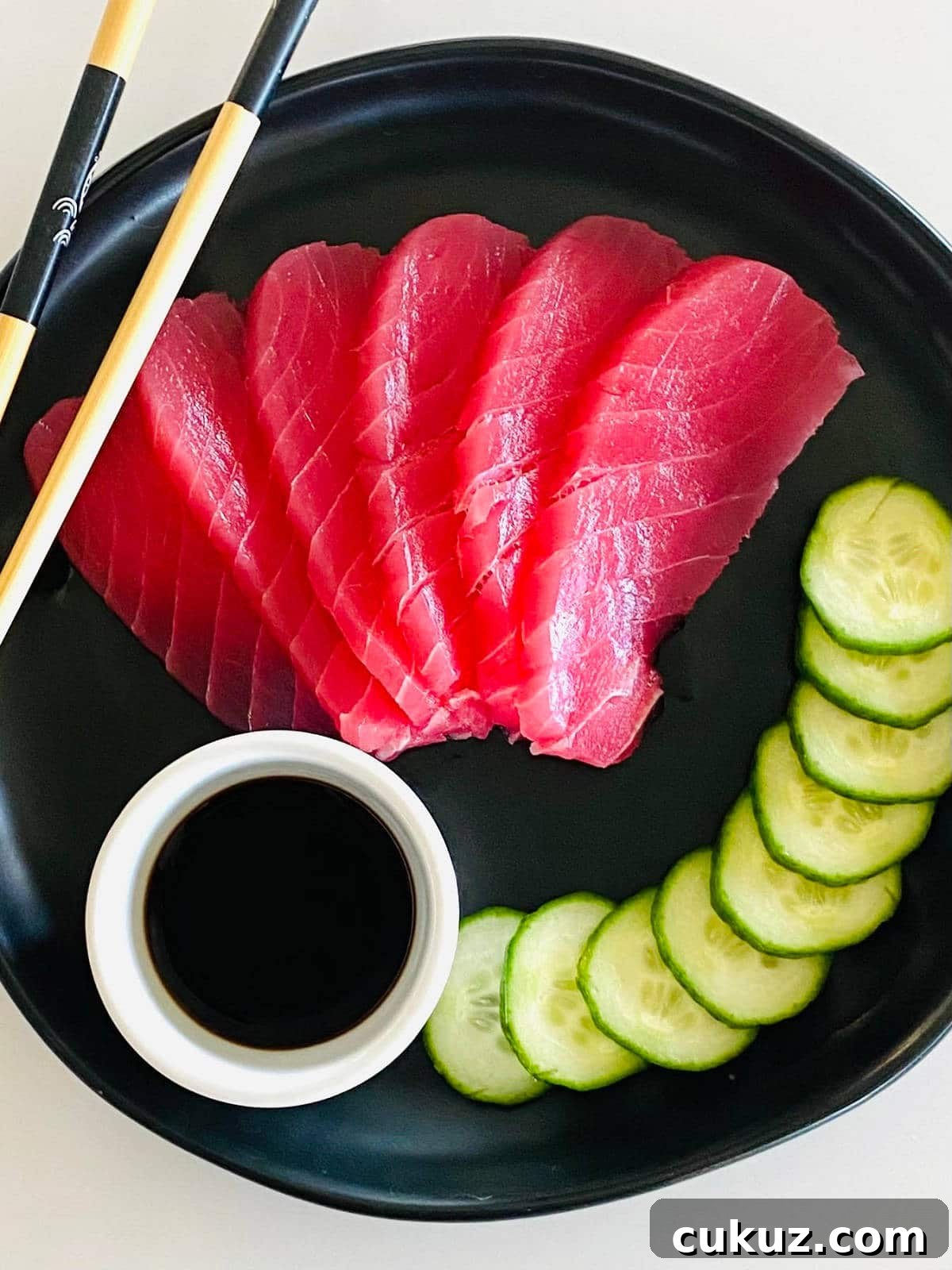
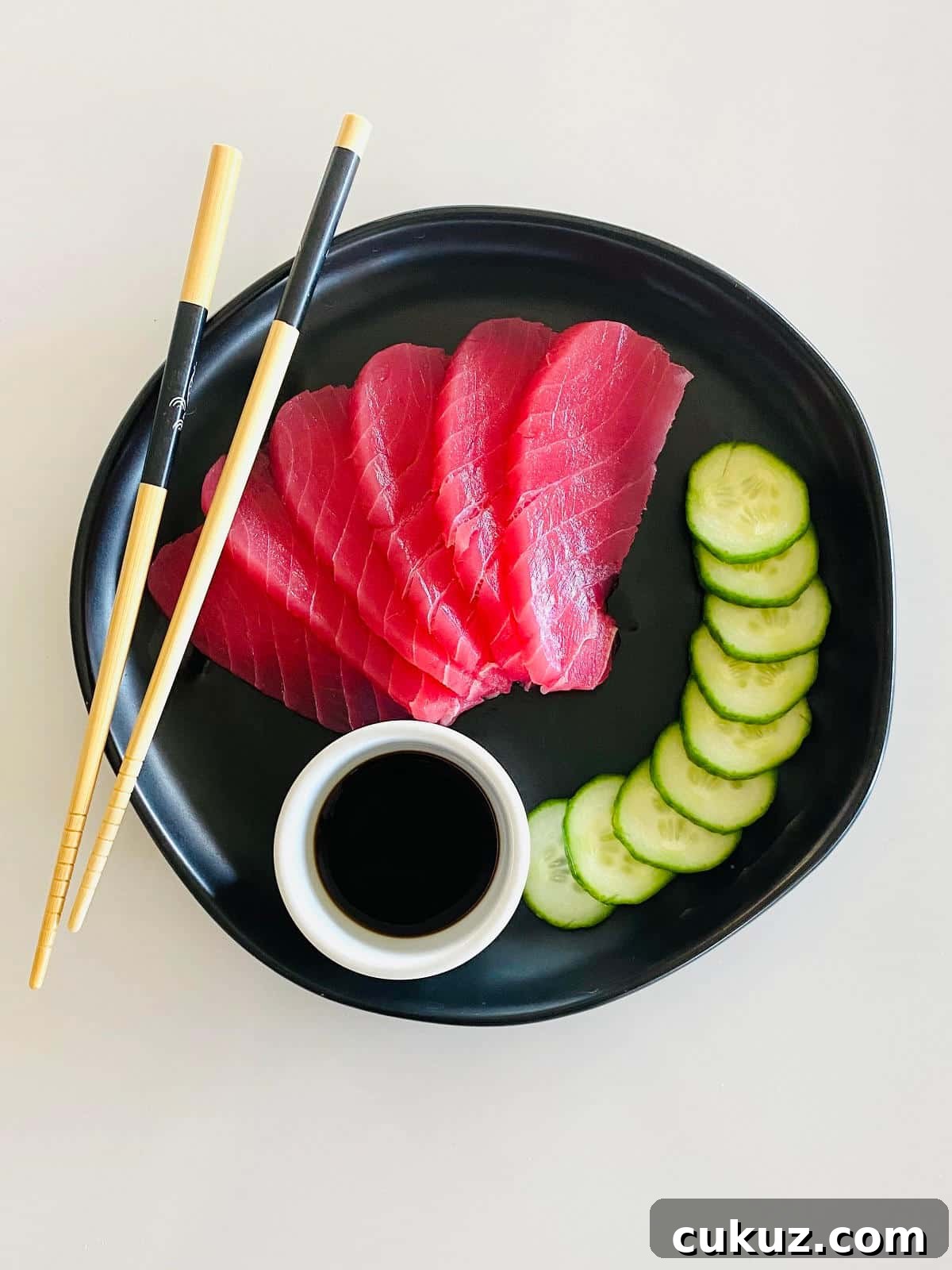
Making tuna sashimi at home is easier than you might think. This guide covers choosing fish safe for raw consumption, the best knives for sashimi, simple preparation steps, correct slicing techniques, and ideas for presentation and garnishes such as fresh wasabi, pickled ginger, soy sauce, yuzu ponzu, and more.
This article contains information about preparing sashimi at home. Follow local food safety guidelines and consult regulatory agencies if you have concerns about raw seafood.
If you love sushi, sashimi and Asian flavors, this tuna sashimi recipe is a great place to start. With simple techniques and attention to safety, you can make restaurant-quality sashimi at home. Below you will find ingredient guidance, step-by-step instructions, sauce suggestions, and tips for clean, attractive plating.
Why this recipe works
- Easy to prepare and naturally low in calories while providing lean protein.
- Simple dipping sauces and garnish options enhance flavor without overwhelming the fish.
- An elegant presentation makes this a great choice for entertaining, date nights, or a special starter course.
Ingredients (Tuna for Sashimi)
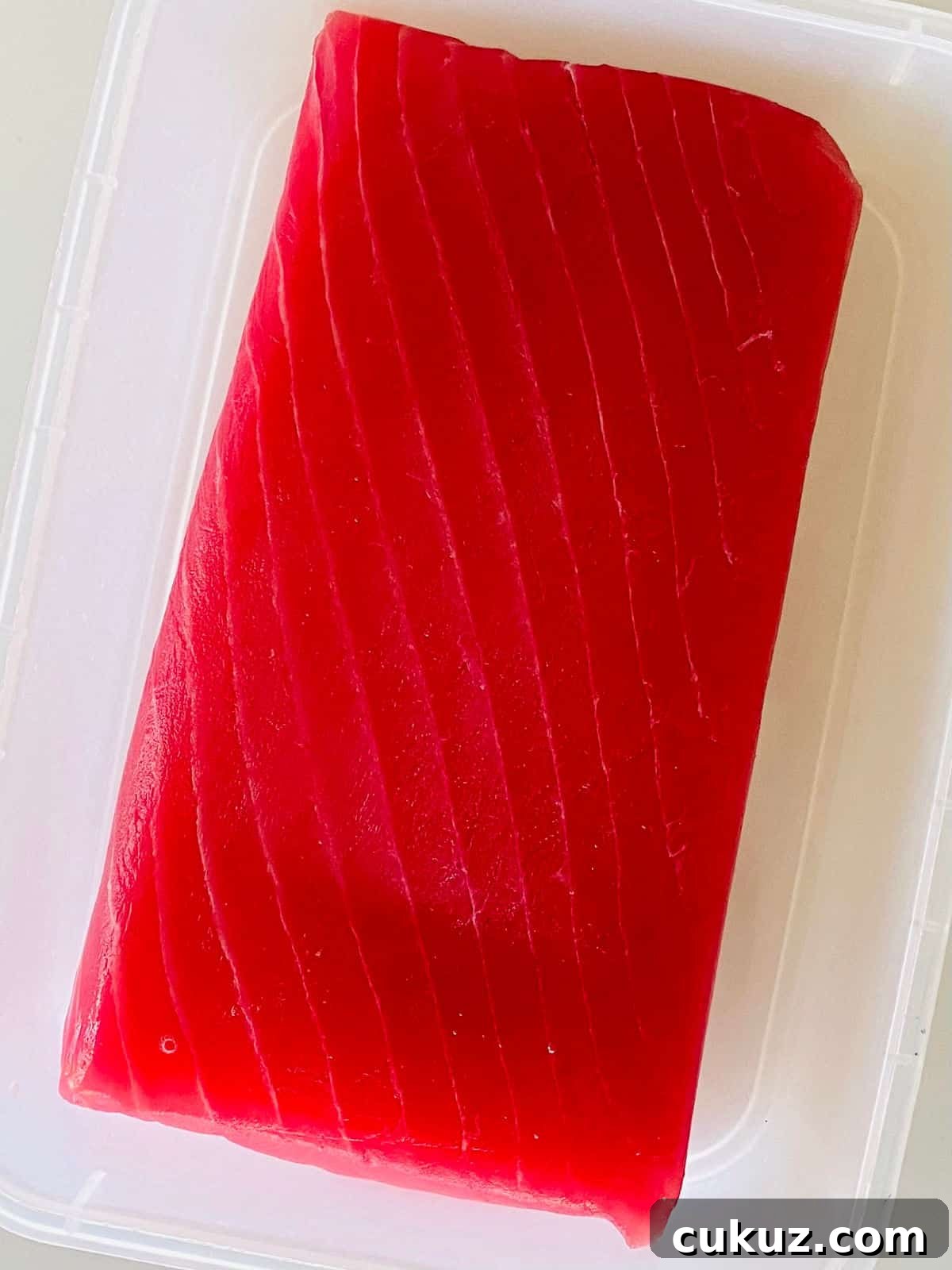
The most important ingredient is tuna that is suitable for raw consumption. Check that your fish supplier follows safe handling and freezing practices for raw service. If available, buy a high-quality saku block — a rectangular portion of fish cut for easy handling and ideal for slicing into sashimi portions.
If you don’t use the entire saku block for sashimi, the remaining tuna is excellent for dishes like ahi poke with sesame oil, soy, scallions, and ginger.
How to make tuna sashimi
- Using a very sharp knife, slice sushi-grade tuna into thin rectangular slices about 1/8″–1/4″ thick (3–6 mm), or to your preference.
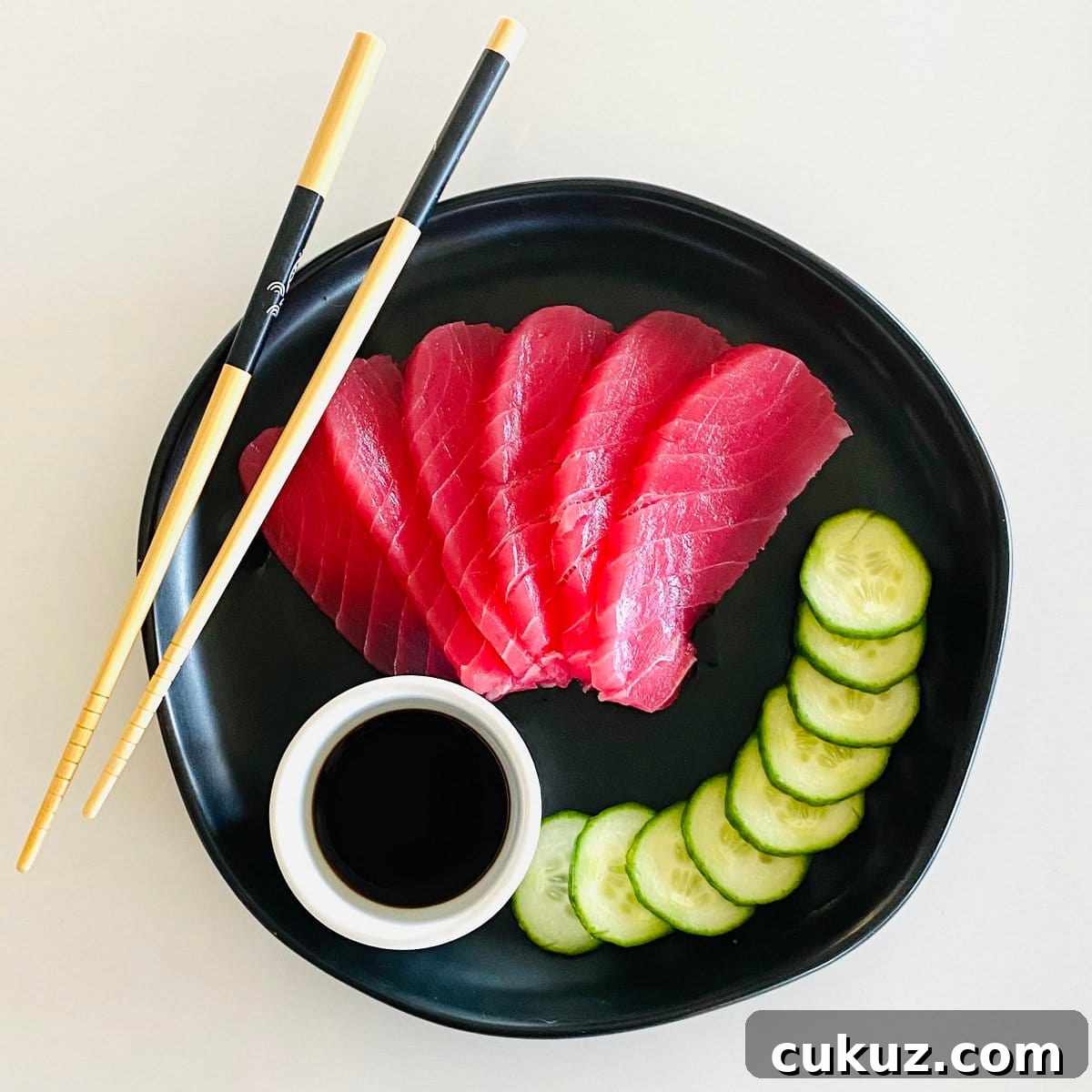
- Arrange slices on a chilled plate, keeping them slightly separated so they don’t stick together.
- Prepare dipping sauces and garnishes to serve alongside the sashimi.
Food safety: Consuming raw or undercooked seafood increases the risk of foodborne illness. Ensure your supplier complies with applicable safety guidelines and freezing requirements intended to reduce parasites.
Leftovers and storage: Sashimi is best eaten immediately and is not recommended for storage.
Tuna nigiri: Place a slice of tuna over a small oval mound of seasoned sushi rice for nigiri.
Presentation and garnishes for sashimi
Soy Citrus Yuzu Ponzu Sauce
- Combine equal parts soy sauce and yuzu ponzu for a bright, savory dipping sauce. Serve in small dipping bowls alongside the sashimi.
- Optional: Add a tiny pinch of pressed or finely minced garlic to make a garlic ponzu variation.
Soy Sauce with Wasabi and Lemon
- Whisk soy sauce with a small amount of wasabi and a few drops of fresh lemon juice for a tart, slightly spicy dipping option. Lemon is not traditional but adds a pleasant brightness.
Optional garnishes
- Fresh wasabi or prepared wasabi paste
- Pickled ginger (gari)
- Thinly sliced cucumber or daikon radish
- Shiso (perilla) leaves as a base or accent
- Microgreens or sesame seeds for visual contrast
Sashimi dipping sauce ideas
- Sriracha mayonnaise for a creamy, spicy dip
- Bang bang-style sauce for a sweet and spicy kick
- Homemade chili crisp to add texture and heat
- Sweet eel (unagi) sauce as a richer option
Popular types of tuna used for sashimi
- Maguro (Bluefin): Highly prized for its rich, buttery texture; includes otoro (fatty belly), chutoro (medium fatty), and akami (lean).
- Yellowfin (Ahi): A versatile option with vibrant color and a milder flavor than bluefin.
- Bigeye: Offers a balance of flavor and fat between bluefin and yellowfin.
- Albacore (Shiro Maguro): Lighter in flavor and color, preferred by those who want a less fatty sashimi.
- Other varieties: Skipjack, bonito and other species can be used in certain preparations but check freshness and handling when serving raw.
How to select tuna for sashimi
Choose seafood from a reputable supplier that follows safe freezing and handling practices for items sold for raw consumption. Inspect the fish visually — it should look clean, bright, and free of off-odors. The choice between fatty or lean cuts depends on personal preference: otoro for rich, melt-in-your-mouth bites; chutoro for balance; akami for a firm, lean option.
Top 3 most popular cuts of tuna
Otoro: The fatty belly cut, prized for its marbling and silky texture.
Chutoro: Medium-fat cut with a balanced flavor and smooth mouthfeel.
Akami: The lean red meat from the back and sides, firmer and cleaner in flavor.
What is sushi grade fish?
The term “sushi grade” or “sashimi grade” is not universally regulated and is often used by sellers to indicate fish suitable for raw consumption. Rather than relying solely on labels, purchase from trusted vendors who adhere to safety guidelines and can confirm proper handling and freezing procedures.
Best sashimi knife
A sharp, long Japanese-style slicing knife is ideal for sashimi. Knives such as a yanagiba or other single-bevel sashimi knives help produce smooth, clean slices. Choose a blade material that holds a fine edge and a handle that feels comfortable and balanced in your hand. A well-maintained, razor-sharp knife makes the biggest difference in slicing quality.
How to properly slice sashimi
- Use a very sharp knife to avoid tearing the flesh.
- Hold the blade at about a 45-degree angle and use a single smooth stroke for each slice; avoid sawing.
- Aim for uniform thickness, typically 1/8″–1/4″ (3–6 mm), depending on preference and the fish.
- Slice against the grain for a tender texture and wipe the blade with a damp cloth between cuts to prevent sticking.
FAQ and expert tips
Tuna sashimi calories: approximately 30 calories per ounce (about 180 calories for a 6-ounce portion).
Other delicious Asian inspired recipes
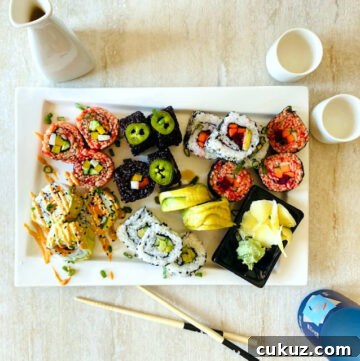
 Vegetable Sushi
-
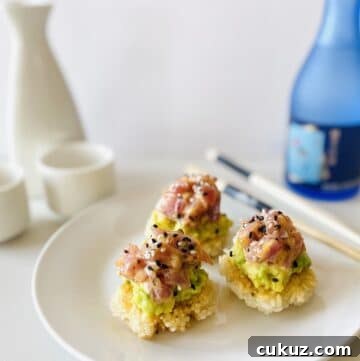
Spicy Tuna Crispy Rice
-
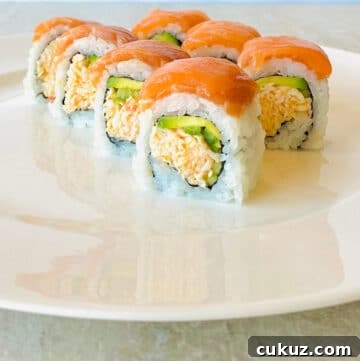
Alaska Roll Sushi
-
Mayak Eggs
If you enjoyed this guide, save the recipe and experiment with different cuts, sauces, and garnishes. Proper sourcing, knife work, and plating will elevate your homemade sashimi to a refined, flavorful experience.